Michael Rubens Bloomberg (born February 14, 1942) is an American businessman, politician, philanthropist, and author. He is the majority owner and co...
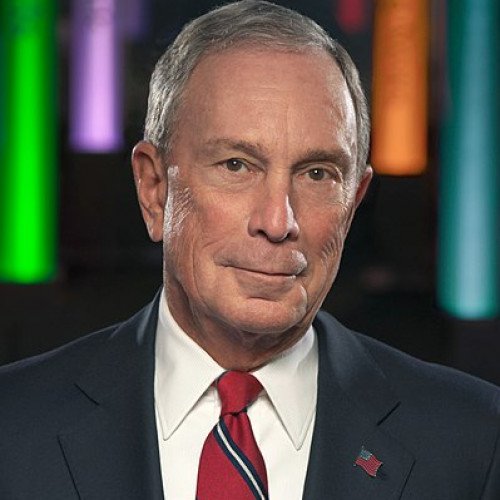
Michael Rubens Bloomberg (born February 14, 1942) is an American businessman, politician, philanthropist, and author. He is the majority owner and co-founder of Bloomberg L.P. He was the mayor of New York City from 2002 to 2013, and was a candidate for the 2020 Democratic nomination for president of the United States.
Bloomberg grew up in Medford, Massachusetts, and graduated from Johns Hopkins University and Harvard Business School. He began his career at the securities brokerage Salomon Brothers before forming his own company in 1981. That company, Bloomberg L.P., is a financial information, software and media firm that is known for its Bloomberg Terminal. Bloomberg spent the next twenty years as its chairman and CEO. In 2020, Forbes ranked him as the sixteenth-richest person in the world, with an estimated net worth of $48 billion as of April 7, 2020 and as of July 21, 2020, Bloomberg ranked 8th in Forbes 400 with net worth $60.1 billion. Since signing The Giving Pledge, Bloomberg has given away $8.2 billion.
Bloomberg was elected the 108th mayor of New York City. First elected in 2001, he held office for three consecutive terms, winning re-election in 2005 and in 2009. Pursuing socially liberal and fiscally moderate policies, Bloomberg developed a technocratic managerial style. After a brief stint as a full-time philanthropist, he re-assumed the position of CEO at Bloomberg L.P. by the end of 2014.
As mayor of New York, Bloomberg established public charter schools, rebuilt urban infrastructure, and supported gun control, public health initiatives, and environmental protections. He also led a rezoning of large areas of the city, which facilitated massive and widespread new commercial and residential construction after the September 11 attacks. Bloomberg is considered to have had far-reaching influence on the politics, business sector, and culture of New York City during his three terms as mayor. He has also faced significant criticism for his expansion of the city's stop and frisk program, support for which he reversed with an apology before his 2020 presidential run.In November 2019, Bloomberg officially launched his campaign for the Democratic nomination for president of the United States in the 2020 election. He ended his campaign in March 2020, after having won only 61 delegates. Bloomberg self-funded $935 million for his candidacy, which set the record for the most expensive U.S. presidential primary campaign.
VS
Charles B. Rangel
Charles Bernard Rangel (; born June 11, 1930) is an American politician who was a U.S. Representative for districts in New York from 1971 to 2017. A...
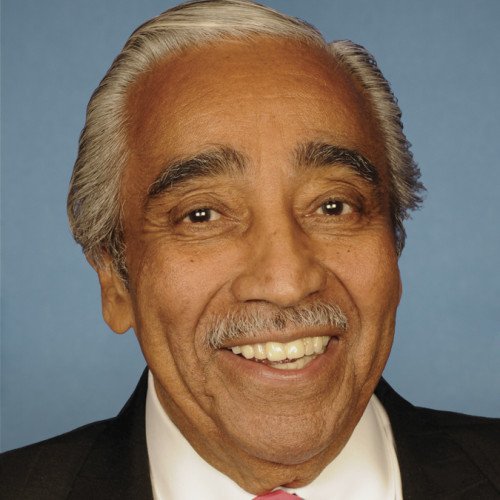
Charles Bernard Rangel (; born June 11, 1930) is an American politician who was a U.S. Representative for districts in New York from 1971 to 2017. A member of the Democratic Party, he was the second-longest serving incumbent member of the House of Representatives at the time of his retirement, serving continuously since 1971. As its most senior member, he was also the Dean of New York's congressional delegation. Rangel was the first African-American Chair of the influential House Ways and Means Committee. He is also a founding member of the Congressional Black Caucus.
Rangel was born in Harlem in Upper Manhattan and lives there to this day. He earned a Purple Heart and a Bronze Star for his service in the U.S. Army during the Korean War, where he led a group of soldiers out of a deadly Chinese army encirclement during the Battle of Kunu-ri in 1950. Rangel graduated from New York University in 1957 and St. John's University School of Law in 1960. He then worked as a private lawyer, Assistant U.S. Attorney, and legal counsel during the early-mid-1960s. He served two terms in the New York State Assembly, from 1967 to 1971, and then defeated long-time incumbent Congressman Adam Clayton Powell Jr. in a primary challenge on his way to being elected to the House of Representatives.
Once there, Rangel rose rapidly in the Democratic ranks, combining solidly liberal views with a pragmatic approach towards finding political and legislative compromises. His long-time concerns with battling the importation and effects of illegal drugs led to his becoming chair of the House Select Committee on Narcotics, where he helped define national policy on the issue during the 1980s. As one of Harlem's "Gang of Four", he also became a leader in New York City and State politics. He played a significant role in the creation of the 1995 Upper Manhattan Empowerment Zone Development Corporation and the national Empowerment Zone Act, which helped change the economic face of Harlem and other inner-city areas. Rangel is known both for his genial manner, with an ability to win over fellow legislators, and for his blunt speaking; he has long been outspoken about his views and has been arrested several times as part of political demonstrations. He was a strong opponent of the George W. Bush administration and the Iraq War, and he put forth proposals to reinstate the draft during the 2000s.
Beginning in 2008, Rangel faced a series of personal legal issues focusing on ethics violations and allegations of failures to abide by the tax laws. The House Ethics Committee focused on whether Rangel improperly rented multiple rent-stabilized New York apartments, improperly used his office in raising money for the Rangel Center at the City College of New York, and failed to disclose rental income from his villa in the Dominican Republic. In March 2010, Rangel stepped aside as Ways and Means Chair. In November 2010, the Ethics Committee found Rangel guilty of 11 counts of violating House ethics rules, and on December 2, 2010, the full House approved a sanction of censure against him. During the 2012 and 2014 elections, Rangel faced two strong primary challenges in a now primarily Hispanic district but prevailed. He did not run for re-election in 2016 and left office in January 2017.



Comments (0)
No comments yet. Be the first to share your thoughts!