Michael Rubens Bloomberg (born February 14, 1942) is an American businessman, politician, philanthropist, and author. He is the majority owner and co...
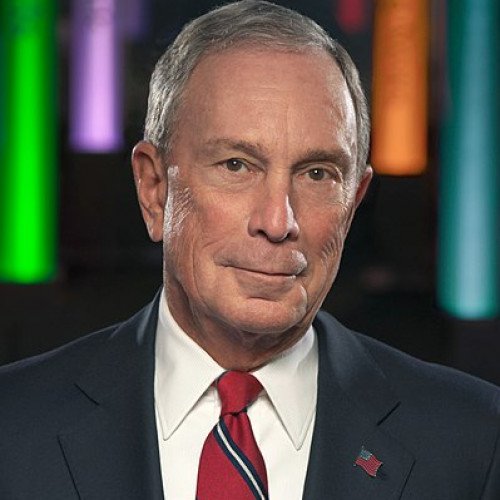
Michael Rubens Bloomberg (born February 14, 1942) is an American businessman, politician, philanthropist, and author. He is the majority owner and co-founder of Bloomberg L.P. He was the mayor of New York City from 2002 to 2013, and was a candidate for the 2020 Democratic nomination for president of the United States.
Bloomberg grew up in Medford, Massachusetts, and graduated from Johns Hopkins University and Harvard Business School. He began his career at the securities brokerage Salomon Brothers before forming his own company in 1981. That company, Bloomberg L.P., is a financial information, software and media firm that is known for its Bloomberg Terminal. Bloomberg spent the next twenty years as its chairman and CEO. In 2020, Forbes ranked him as the sixteenth-richest person in the world, with an estimated net worth of $48 billion as of April 7, 2020 and as of July 21, 2020, Bloomberg ranked 8th in Forbes 400 with net worth $60.1 billion. Since signing The Giving Pledge, Bloomberg has given away $8.2 billion.
Bloomberg was elected the 108th mayor of New York City. First elected in 2001, he held office for three consecutive terms, winning re-election in 2005 and in 2009. Pursuing socially liberal and fiscally moderate policies, Bloomberg developed a technocratic managerial style. After a brief stint as a full-time philanthropist, he re-assumed the position of CEO at Bloomberg L.P. by the end of 2014.
As mayor of New York, Bloomberg established public charter schools, rebuilt urban infrastructure, and supported gun control, public health initiatives, and environmental protections. He also led a rezoning of large areas of the city, which facilitated massive and widespread new commercial and residential construction after the September 11 attacks. Bloomberg is considered to have had far-reaching influence on the politics, business sector, and culture of New York City during his three terms as mayor. He has also faced significant criticism for his expansion of the city's stop and frisk program, support for which he reversed with an apology before his 2020 presidential run.In November 2019, Bloomberg officially launched his campaign for the Democratic nomination for president of the United States in the 2020 election. He ended his campaign in March 2020, after having won only 61 delegates. Bloomberg self-funded $935 million for his candidacy, which set the record for the most expensive U.S. presidential primary campaign.
VS
Paul Ryan
Paul Davis Ryan (born January 29, 1970) is a retired American politician who served as the 54th speaker of the United States House of Representatives...
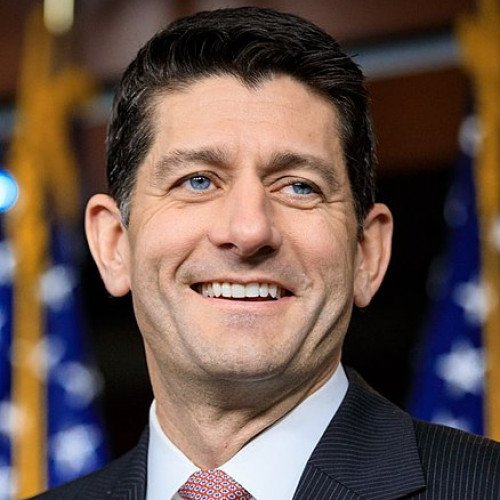
Paul Davis Ryan (born January 29, 1970) is a retired American politician who served as the 54th speaker of the United States House of Representatives from October 2015 to January 2019. He was also the 2012 vice presidential nominee of the Republican Party, running unsuccessfully alongside Mitt Romney.
Ryan, a native of Janesville, Wisconsin, graduated from Miami University in 1992. He spent five years working for Republicans in Washington, D.C. and returned to Wisconsin in 1997 to work at his family's construction company. Ryan was elected to Congress to represent Wisconsin's 1st congressional district the following year, replacing an incumbent Republican who ran for U.S. Senate. Ryan would represent the district for 20 years. He chaired the House Budget Committee from 2011 to 2015 and briefly chaired the House Ways and Means Committee in 2015 prior to being elected Speaker of the House in October 2015 following John Boehner's retirement.
A self-proclaimed deficit hawk, Ryan was a major proponent of Social Security privatization in the mid-2000s. In the 2010s, two proposals heavily influenced by Ryan—"The Path to Prosperity" and "A Better Way"—advocated for the privatization of Medicare, the conversion of Medicaid into a block grant program, the repeal of the Affordable Care Act, and significant federal tax cuts. As Speaker, he had a role in passage of the Tax Cuts and Jobs Act of 2017. His other major piece of legislation, the American Health Care Act of 2017, passed the House but failed in the Senate by one vote. Despite his past fiscal conservative rhetoric, Ryan's tenure as Speaker of the House—most of which coincided with a period of unified Republican control of the federal government—saw a significant increase in federal government spending and deficits.
Ryan declined to run for re-election in the 2018 midterm elections. With the Democratic Party taking control of the House of Representatives, Nancy Pelosi succeeded Ryan as Speaker of the House.



Comments (0)
No comments yet. Be the first to share your thoughts!