Tulsi Gabbard (; born April 12, 1981) is an American politician and United States Army Reserve officer who served as the U.S. Representative for Hawai...
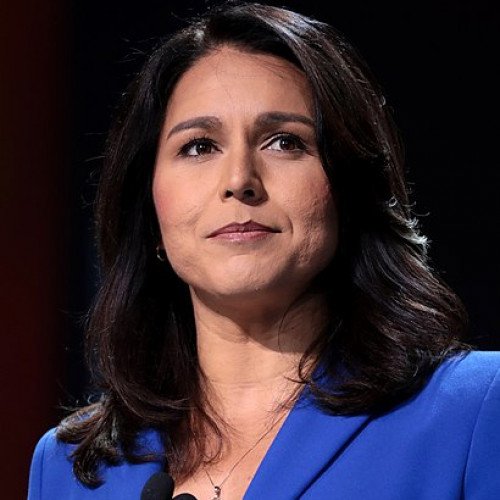
Tulsi Gabbard (; born April 12, 1981) is an American politician and United States Army Reserve officer who served as the U.S. Representative for Hawaii's 2nd congressional district from 2013 to 2021. Elected in 2012, she was the first Hindu member of Congress and also the first Samoan-American voting member of Congress. In early February 2019 she announced her candidacy for the Democratic nomination in the 2020 United States presidential election.In 2002, Gabbard was elected to the Hawaii House of Representatives at the age of 21. Gabbard served in a field medical unit of the Hawaii Army National Guard in Iraq from 2004 to 2005 and was deployed to Kuwait from 2008 to 2009 as an Army Military Police platoon leader. She was a vice chair of the Democratic National Committee from 2013 to 2016, when she resigned to endorse Senator Bernie Sanders for the 2016 Democratic presidential nomination.
Gabbard supports a two-tier universal health care plan that she calls "Single Payer Plus" and strengthening Roe v. Wade by codifying it into federal law. Her position has evolved on the issue and she now believes that abortion should be "safe, legal and rare", although it is not a choice she would personally make. She co-sponsored the Family Act for paid family and medical leave and endorsed universal basic income. She opposes military interventionism, although she has called herself a "hawk" on terrorism. Her decision to meet Syrian President Bashar al-Assad and her skeptical approach to two claims that he had used chemical weapons were controversial.On March 19, 2020, Gabbard dropped out of the 2020 presidential race and endorsed Joe Biden. She had already withdrawn from her U.S. House re-election race during her presidential campaign and was succeeded by Kai Kahele on January 3, 2021.
VS
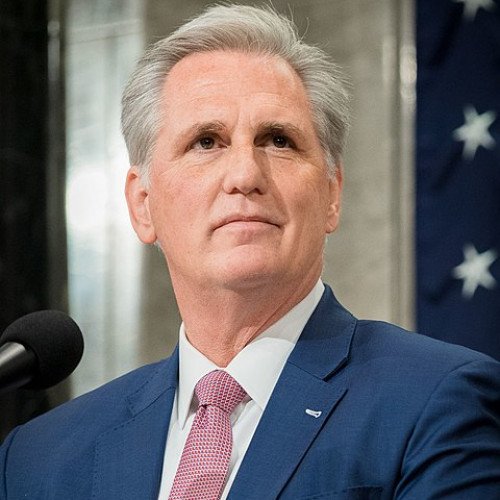
Kevin McCarthy
Harry Mason Reid (; born December 2, 1939) is a retired American attorney and politician who served as a United States Senator from Nevada from 1987 t...
Harry Mason Reid (; born December 2, 1939) is a retired American attorney and politician who served as a United States Senator from Nevada from 1987 to 2017. He led the Senate's Democratic Conference from 2005 to 2017 and was the Senate Majority Leader from 2007 to 2015.
Reid began his public career as the city attorney for Henderson, Nevada before winning election to the Nevada Assembly in 1968. Reid's former boxing coach, Mike O'Callaghan, chose Reid as his running mate in the 1970 Nevada gubernatorial election, and Reid served as Lieutenant Governor of Nevada from 1971 to 1975. After being defeated in races for the United States Senate and for the office of mayor of Las Vegas, Reid served as chairman of the Nevada Gaming Commission from 1977 to 1981. From 1983 to 1987, Reid represented Nevada's 1st district in the United States House of Representatives.
Reid won election to the United States Senate in 1986 and served in the Senate from 1987 to 2017. He served as the Senate Democratic Whip from 1999 to 2005 before succeeding Tom Daschle as Senate Minority Leader. The Democrats won control of the Senate after the 2006 United States Senate elections, and Reid became the Senate Majority Leader in 2007. He held that position for the final two years of George W. Bush's presidency and for the first six years of Barack Obama's presidency. As Majority Leader, Reid helped pass major legislation, such as the Patient Protection and Affordable Care Act, the Dodd–Frank Act, and the American Recovery and Reinvestment Act of 2009. Republicans took control of the Senate following the 2014 United States Senate elections, and Reid served as Senate Minority Leader from 2015 until his retirement in 2017.
Reid was succeeded as the Senate Democratic leader by Chuck Schumer, whose leadership bid had been endorsed by Reid. Along with Alben W. Barkley and Mike Mansfield, Reid is one of only three senators to have served at least eight years as majority leader.



Comments (0)
No comments yet. Be the first to share your thoughts!