Willard Mitt Romney (born March 12, 1947) is an American politician, businessman and former presidential candidate who has served as the junior United...
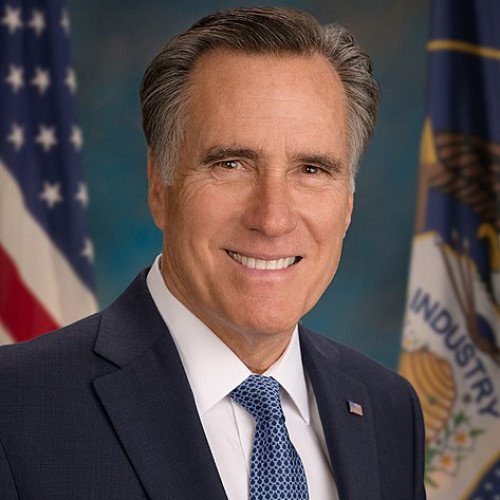
Willard Mitt Romney (born March 12, 1947) is an American politician, businessman and former presidential candidate who has served as the junior United States senator from Utah since January 2019. He previously served as the 70th governor of Massachusetts from 2003 to 2007 and was the Republican Party's nominee for president of the United States in the 2012 election.
Raised in Bloomfield Hills, Michigan, by his parents, George and Lenore Romney, he spent over two years from 1966 in France as a Mormon missionary. He married Ann Davies in 1969; they have five sons. By 1971, he had participated in the political campaigns of both parents. In 1971 Romney graduated as a Bachelor of Arts in English from Brigham Young University (BYU) and in 1975 gained the JD–MBA degree from Harvard. Romney became a management consultant and in 1977 joined Bain & Company in Boston. As Bain's chief executive officer (CEO), he later helped lead the company out of a financial crisis. In 1984, he co-founded and led the spin-off company Bain Capital, a private equity investment firm that became one of the largest of its kind in the nation. Active in The Church of Jesus Christ of Latter-day Saints (LDS Church) throughout his adult life, Romney served as bishop of his ward and later as a stake president, for an area covering Boston and many of its suburbs.
After stepping down from Bain Capital and his local leadership role in the LDS Church, Romney ran as the Republican candidate in the 1994 United States Senate election in Massachusetts. After losing to longtime incumbent Ted Kennedy, he resumed his position at Bain Capital. Years later, a successful stint as president and CEO of the then-struggling Salt Lake Organizing Committee for the 2002 Winter Olympics led to a re-launch of his political career. Elected Governor of Massachusetts in 2002, Romney helped develop and later signed a health care reform law (commonly referred to as "Romneycare") that provided near-universal health insurance access through state-level subsidies and individual mandates to purchase insurance. He also presided over the elimination of a projected $1.2–1.5 billion deficit through a combination of spending cuts, increased fees and closing corporate tax loopholes. He did not seek re-election in 2006, instead focusing on his campaign for the Republican nomination in the 2008 U.S. presidential election. Though he won several primaries and caucuses, Romney ultimately lost the nomination to Senator John McCain. Romney's considerable net worth, estimated in 2012 at $190–250 million, helped finance his political campaigns prior to 2012. Romney again ran for and won the Republican presidential nomination in 2012, becoming the first Mormon to be a presidential nominee of a major party. He was defeated by incumbent Democratic President Barack Obama in the 2012 presidential election, losing the Electoral College by a margin of 206–332 and the popular vote by a margin of 47–51%.
After re-establishing residency in Utah, Romney announced his campaign for the U.S. Senate seat held by the retiring Orrin Hatch in the 2018 election; he defeated state representative Mike Kennedy in the Republican primary and Democrat Jenny Wilson in the general election. In doing so, he became only the third individual ever to be elected governor of one state and U.S. senator for another state (the others being Sam Houston and William Bibb). Romney was sworn in on January 3, 2019. In the impeachment trial of Donald Trump, he voted to convict the president of abuse of power (over Trump's attempts to get Ukrainian President Volodymyr Zelensky to announce an investigation into his political rival Joe Biden), becoming the first and only senator in U.S. history to vote to convict a president of his own party.
VS
Rick Perry
James Richard "Rick" Perry (born March 4, 1950) is an American politician who served as the 14th United States Secretary of Energy from 2017 to 2019 a...
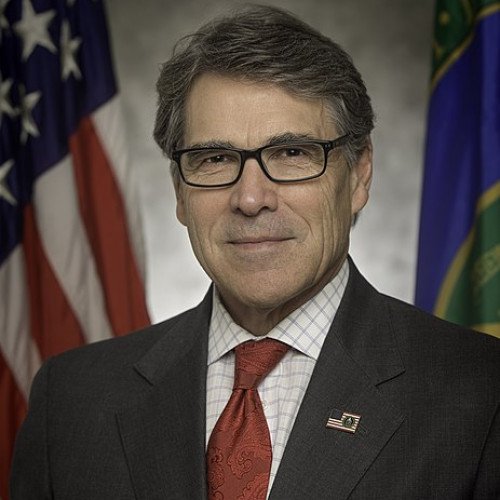
James Richard "Rick" Perry (born March 4, 1950) is an American politician who served as the 14th United States Secretary of Energy from 2017 to 2019 and as the 47th Governor of Texas from 2000 to 2015. Perry also ran unsuccessfully for the Republican nomination for President of the United States in the 2012 and 2016 elections.
Born into a family of cotton farmers in Haskell, Texas, Perry graduated from Texas A&M University in 1972 and entered into the United States Air Force, serving a five-year stint and achieving the rank of captain. After leaving the Air Force in 1977, Perry returned to Texas and entered politics, serving as a Democratic member of the Texas House of Representatives from 1985 to 1991. In 1989, Perry switched parties and became a Republican, and was elected Agriculture Commissioner of Texas the following year. In 1998, Perry was elected Lieutenant Governor of Texas, becoming the state's first Republican Lieutenant Governor since Reconstruction.
Perry assumed the governorship of Texas in December 2000, after Governor George W. Bush resigned following his election as President. Perry was re-elected Governor three times, becoming the longest-serving Governor in Texas history. As Governor, Perry identified as a staunch conservative, enacting conservative fiscal policies, restrictions on abortion and expanded gun rights. Long considered a potential presidential candidate, Perry officially announced his candidacy for the 2012 Republican nomination for President in August 2011. Perry initially performed well in polling and showed strong fundraising prowess, leading to him being considered a serious contender for the nomination, however his support declined following poor performances in debates and early primaries and he withdrew from the race in January 2012.Perry declined to run for re-election to a fourth term as Governor and left office in 2015, launching a second presidential campaign shortly after. Perry's second presidential campaign failed to garner substantial polling support, fundraising or media attention, leading to him withdrawing from the race after only three months. Perry was initially a vocal opponent of Donald Trump's 2016 campaign for President, however he later endorsed Trump after he secured the Republican nomination. After winning the presidency, Trump appointed Perry as Secretary of Energy and he was confirmed by the United States Senate in a 62–37 vote on March 2, 2017. On October 17, 2019, Perry reported to Trump that he intended to resign as Secretary of Energy at the end of the year. He left office on December 1, 2019.



Comments (0)
No comments yet. Be the first to share your thoughts!