Willard Mitt Romney (born March 12, 1947) is an American politician, businessman and former presidential candidate who has served as the junior United...
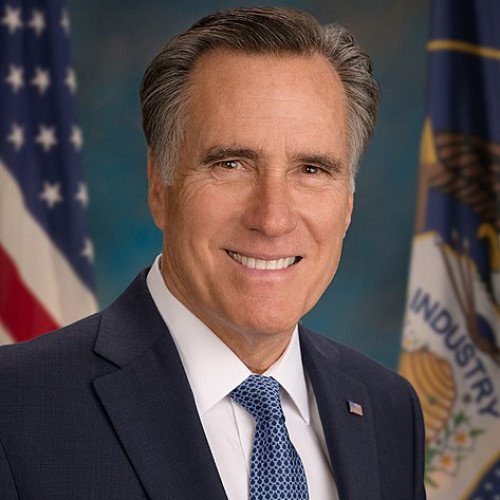
Willard Mitt Romney (born March 12, 1947) is an American politician, businessman and former presidential candidate who has served as the junior United States senator from Utah since January 2019. He previously served as the 70th governor of Massachusetts from 2003 to 2007 and was the Republican Party's nominee for president of the United States in the 2012 election.
Raised in Bloomfield Hills, Michigan, by his parents, George and Lenore Romney, he spent over two years from 1966 in France as a Mormon missionary. He married Ann Davies in 1969; they have five sons. By 1971, he had participated in the political campaigns of both parents. In 1971 Romney graduated as a Bachelor of Arts in English from Brigham Young University (BYU) and in 1975 gained the JD–MBA degree from Harvard. Romney became a management consultant and in 1977 joined Bain & Company in Boston. As Bain's chief executive officer (CEO), he later helped lead the company out of a financial crisis. In 1984, he co-founded and led the spin-off company Bain Capital, a private equity investment firm that became one of the largest of its kind in the nation. Active in The Church of Jesus Christ of Latter-day Saints (LDS Church) throughout his adult life, Romney served as bishop of his ward and later as a stake president, for an area covering Boston and many of its suburbs.
After stepping down from Bain Capital and his local leadership role in the LDS Church, Romney ran as the Republican candidate in the 1994 United States Senate election in Massachusetts. After losing to longtime incumbent Ted Kennedy, he resumed his position at Bain Capital. Years later, a successful stint as president and CEO of the then-struggling Salt Lake Organizing Committee for the 2002 Winter Olympics led to a re-launch of his political career. Elected Governor of Massachusetts in 2002, Romney helped develop and later signed a health care reform law (commonly referred to as "Romneycare") that provided near-universal health insurance access through state-level subsidies and individual mandates to purchase insurance. He also presided over the elimination of a projected $1.2–1.5 billion deficit through a combination of spending cuts, increased fees and closing corporate tax loopholes. He did not seek re-election in 2006, instead focusing on his campaign for the Republican nomination in the 2008 U.S. presidential election. Though he won several primaries and caucuses, Romney ultimately lost the nomination to Senator John McCain. Romney's considerable net worth, estimated in 2012 at $190–250 million, helped finance his political campaigns prior to 2012. Romney again ran for and won the Republican presidential nomination in 2012, becoming the first Mormon to be a presidential nominee of a major party. He was defeated by incumbent Democratic President Barack Obama in the 2012 presidential election, losing the Electoral College by a margin of 206–332 and the popular vote by a margin of 47–51%.
After re-establishing residency in Utah, Romney announced his campaign for the U.S. Senate seat held by the retiring Orrin Hatch in the 2018 election; he defeated state representative Mike Kennedy in the Republican primary and Democrat Jenny Wilson in the general election. In doing so, he became only the third individual ever to be elected governor of one state and U.S. senator for another state (the others being Sam Houston and William Bibb). Romney was sworn in on January 3, 2019. In the impeachment trial of Donald Trump, he voted to convict the president of abuse of power (over Trump's attempts to get Ukrainian President Volodymyr Zelensky to announce an investigation into his political rival Joe Biden), becoming the first and only senator in U.S. history to vote to convict a president of his own party.
VS
Joe Lieberman
Joseph Isadore Lieberman (; born February 24, 1942) is an American politician, lobbyist and attorney who served as a United States Senator from Connec...
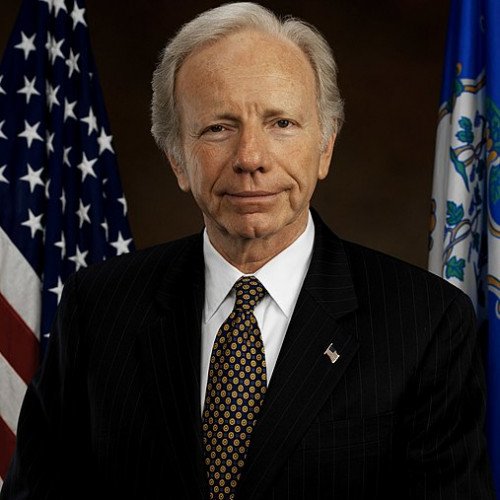
Joseph Isadore Lieberman (; born February 24, 1942) is an American politician, lobbyist and attorney who served as a United States Senator from Connecticut from 1989 to 2013. A former member of the Democratic Party, he was its nominee for Vice President of the United States in the 2000 election. During his final term in office he was officially listed as an independent Democrat and caucused with and chaired committees for the Democratic Party.
Lieberman was elected as a "Reform Democrat" in 1970 to the Connecticut Senate, where he served three terms as Majority Leader. After an unsuccessful bid for the U.S. House of Representatives in 1980, he served as state Attorney General from 1983 to 1989. He narrowly defeated Republican incumbent Lowell Weicker in 1988 to win election to the U.S. Senate, and was re-elected in 1994, 2000, and 2006. He was the Democratic nominee for Vice President in the 2000 United States presidential election, running with presidential nominee and then Vice President Al Gore, and becoming the first Jewish candidate on a major American political party presidential ticket.In the 2000 presidential election, Gore and Lieberman won the popular vote by a margin of more than 500,000 votes, but lost the deciding Electoral College to the Republican George W. Bush/Dick Cheney ticket 271–266. He also unsuccessfully sought the Democratic nomination in the 2004 presidential election.
During his Senate re-election bid in 2006, Lieberman lost the Democratic Party primary election, but won re-election in the general election as a third party candidate under the "Connecticut for Lieberman" party label. Never a member of that party, he remained a registered Democrat while he ran.Lieberman was officially listed in Senate records for the 110th and 111th Congresses as an Independent Democrat, and sat as part of the Senate Democratic Caucus. However, after his speech at the 2008 Republican National Convention in which he endorsed John McCain for president, he no longer attended Democratic Caucus leadership strategy meetings or policy lunches. On November 5, 2008, he met with Senate Majority Leader Harry Reid to discuss his future role with the Democratic Party. Ultimately, the Senate Democratic Caucus voted to allow him to keep the chairmanship of the Senate Committee on Homeland Security and Governmental Affairs. Subsequently, he announced that he would continue to caucus with the Democrats. Before the 2016 election, he endorsed Hillary Clinton for president.
As Senator, Lieberman introduced and championed the Don't Ask, Don't Tell Repeal Act of 2010 and legislation that led to the creation of the Department of Homeland Security. During debate on the Affordable Care Act (ACA), as the crucial 60th vote needed to pass the legislation, his opposition to the public health insurance option was critical to its removal from the resulting bill signed by President Barack Obama.



Comments (0)
No comments yet. Be the first to share your thoughts!