Randal Howard Paul (born January 7, 1963) is an American politician and physician serving as the junior United States Senator from Kentucky since 2011...
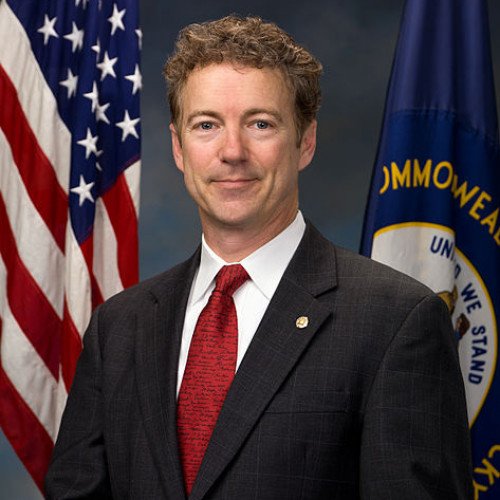
Randal Howard Paul (born January 7, 1963) is an American politician and physician serving as the junior United States Senator from Kentucky since 2011. He is a son of former twelve-term U.S. Representative Ron Paul of Texas, who was a presidential candidate in 1988, 2008, and 2012.
Born in Pittsburgh, Pennsylvania, Paul attended Baylor University and is a graduate of the Duke University School of Medicine. Paul began practicing ophthalmology in 1993 in Bowling Green, Kentucky, and established his own clinic in December 2007. In 2010, Paul entered politics by running for a seat in the United States Senate. A Republican, Paul has described himself as a constitutional conservative and a supporter of the Tea Party movement.
Paul was a candidate for the Republican nomination at the 2016 U.S. presidential election. He suspended his campaign in February 2016, after finishing in fifth place during the Iowa caucuses.
VS
Paul Ryan
Paul Davis Ryan (born January 29, 1970) is a retired American politician who served as the 54th speaker of the United States House of Representatives...
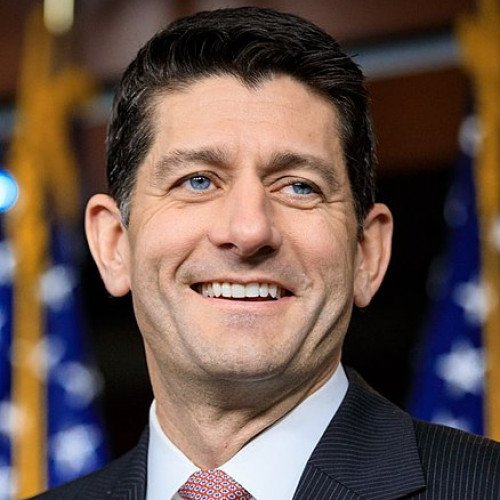
Paul Davis Ryan (born January 29, 1970) is a retired American politician who served as the 54th speaker of the United States House of Representatives from October 2015 to January 2019. He was also the 2012 vice presidential nominee of the Republican Party, running unsuccessfully alongside Mitt Romney.
Ryan, a native of Janesville, Wisconsin, graduated from Miami University in 1992. He spent five years working for Republicans in Washington, D.C. and returned to Wisconsin in 1997 to work at his family's construction company. Ryan was elected to Congress to represent Wisconsin's 1st congressional district the following year, replacing an incumbent Republican who ran for U.S. Senate. Ryan would represent the district for 20 years. He chaired the House Budget Committee from 2011 to 2015 and briefly chaired the House Ways and Means Committee in 2015 prior to being elected Speaker of the House in October 2015 following John Boehner's retirement.
A self-proclaimed deficit hawk, Ryan was a major proponent of Social Security privatization in the mid-2000s. In the 2010s, two proposals heavily influenced by Ryan—"The Path to Prosperity" and "A Better Way"—advocated for the privatization of Medicare, the conversion of Medicaid into a block grant program, the repeal of the Affordable Care Act, and significant federal tax cuts. As Speaker, he had a role in passage of the Tax Cuts and Jobs Act of 2017. His other major piece of legislation, the American Health Care Act of 2017, passed the House but failed in the Senate by one vote. Despite his past fiscal conservative rhetoric, Ryan's tenure as Speaker of the House—most of which coincided with a period of unified Republican control of the federal government—saw a significant increase in federal government spending and deficits.
Ryan declined to run for re-election in the 2018 midterm elections. With the Democratic Party taking control of the House of Representatives, Nancy Pelosi succeeded Ryan as Speaker of the House.



Comments (0)
No comments yet. Be the first to share your thoughts!