Henry Alfred Kissinger (; German: [ˈkɪsɪŋɐ]; born Heinz Alfred Kissinger; May 27, 1923) is an American politician, diplomat, and geopolitical consult...
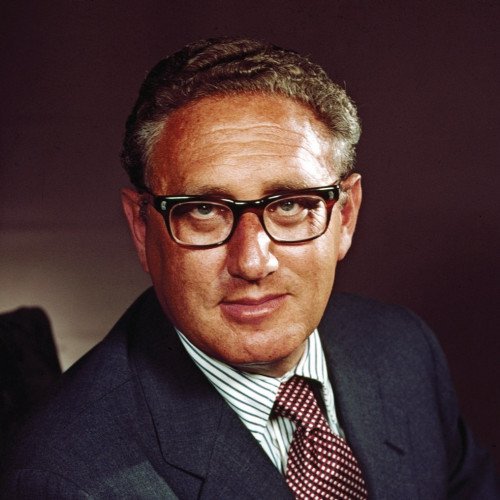
Henry Alfred Kissinger (; German: [ˈkɪsɪŋɐ]; born Heinz Alfred Kissinger; May 27, 1923) is an American politician, diplomat, and geopolitical consultant who served as United States Secretary of State and National Security Advisor under the presidential administrations of Richard Nixon and Gerald Ford. A Jewish refugee who fled Nazi Germany with his family in 1938, he became National Security Advisor in 1969 and U.S. Secretary of State in 1973. For his actions negotiating a ceasefire in Vietnam, Kissinger received the 1973 Nobel Peace Prize under controversial circumstances, with two members of the committee resigning in protest.A practitioner of Realpolitik, Kissinger played a prominent role in United States foreign policy between 1969 and 1977. During this period, he pioneered the policy of détente with the Soviet Union, orchestrated the opening of relations with China, engaged in what became known as shuttle diplomacy in the Middle East to end the Yom Kippur War, and negotiated the Paris Peace Accords, ending American involvement in the Vietnam War. Kissinger has also been associated with such controversial policies as U.S. involvement in the 1973 Chilean military coup, a "green light" to Argentina's military junta for their Dirty War, and U.S. support for Pakistan during the Bangladesh War despite the genocide being perpetrated by his allies. After leaving government, he formed Kissinger Associates, an international geopolitical consulting firm. Kissinger has written over a dozen books on diplomatic history and international relations.
Kissinger remains a controversial and polarizing figure in U.S. politics, both condemned as an alleged war criminal by many journalists, political activists, and human rights lawyers, and venerated as a highly effective U.S. Secretary of State by many prominent international relations scholars.
VS
John Kasich
John Richard Kasich Jr. ( KAY-sik; born May 13, 1952) is an American politician, author, and television news host who served in the U.S. House of Repr...
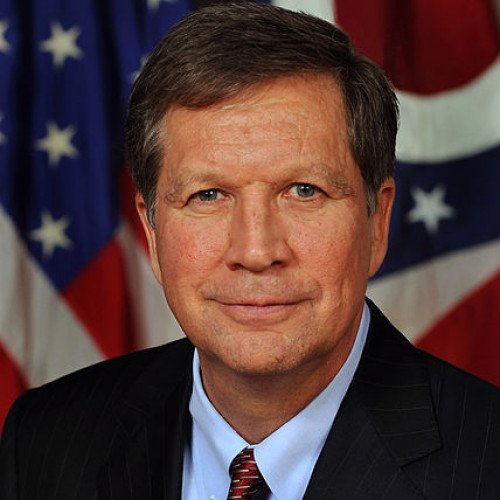
John Richard Kasich Jr. ( KAY-sik; born May 13, 1952) is an American politician, author, and television news host who served in the U.S. House of Representatives from 1983 to 2001 and as the 69th Governor of Ohio from 2011 to 2019. A Republican, Kasich unsuccessfully sought his party's presidential nomination in 2000 and 2016.Kasich grew up in McKees Rocks, Pennsylvania, moving to Ohio to attend college. After a single term in the Ohio Senate, he served nine terms as a member of the United States House of Representatives from Ohio's 12th congressional district. His tenure in the House included 18 years on the House Armed Services Committee and six years as chairman of the House Budget Committee. Kasich was a key figure in the passage of both 1996 welfare reform legislation and the Balanced Budget Act of 1997. Kasich decided not to run for re-election in 2000 and ran for president instead. He withdrew from the race before the Republican primaries.
After leaving Congress, Kasich hosted Heartland with John Kasich on Fox News from 2001 to 2007 and served as managing director of the Lehman Brothers office in Columbus, Ohio. He ran for governor of Ohio in 2010, defeating Democratic incumbent Ted Strickland. He was re-elected in 2014, defeating Democratic challenger Ed FitzGerald by 30 percentage points. Kasich was term-limited and could not seek a third gubernatorial term in 2018; he was succeeded by Mike DeWine.
Kasich ran for president again in 2016, finishing in third place in the Republican primaries behind Donald Trump and Ted Cruz. He won the primary in his home state of Ohio and finished second in New Hampshire. Kasich declined to support Trump as the Republican presidential nominee and did not attend the 2016 Republican National Convention, which was held in Ohio. In 2019, following the end of his second term as governor, Kasich joined CNN as a contributor. Kasich is known as one of the most prominent critics of Trump within the Republican Party, and he endorsed Democratic presidential nominee Joe Biden for president in a speech at the 2020 Democratic National Convention.



Comments (0)
No comments yet. Be the first to share your thoughts!