Henry Alfred Kissinger (; German: [ˈkɪsɪŋɐ]; born Heinz Alfred Kissinger; May 27, 1923) is an American politician, diplomat, and geopolitical consult...
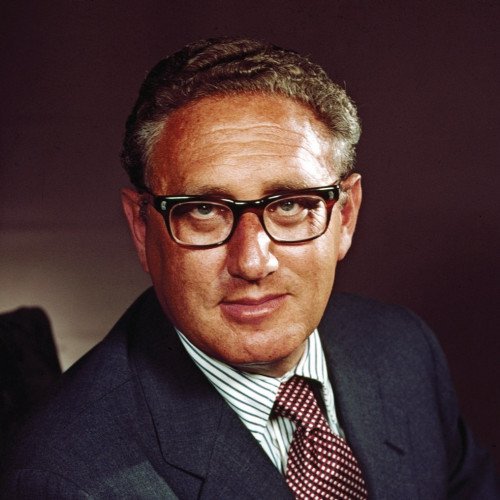
Henry Alfred Kissinger (; German: [ˈkɪsɪŋɐ]; born Heinz Alfred Kissinger; May 27, 1923) is an American politician, diplomat, and geopolitical consultant who served as United States Secretary of State and National Security Advisor under the presidential administrations of Richard Nixon and Gerald Ford. A Jewish refugee who fled Nazi Germany with his family in 1938, he became National Security Advisor in 1969 and U.S. Secretary of State in 1973. For his actions negotiating a ceasefire in Vietnam, Kissinger received the 1973 Nobel Peace Prize under controversial circumstances, with two members of the committee resigning in protest.A practitioner of Realpolitik, Kissinger played a prominent role in United States foreign policy between 1969 and 1977. During this period, he pioneered the policy of détente with the Soviet Union, orchestrated the opening of relations with China, engaged in what became known as shuttle diplomacy in the Middle East to end the Yom Kippur War, and negotiated the Paris Peace Accords, ending American involvement in the Vietnam War. Kissinger has also been associated with such controversial policies as U.S. involvement in the 1973 Chilean military coup, a "green light" to Argentina's military junta for their Dirty War, and U.S. support for Pakistan during the Bangladesh War despite the genocide being perpetrated by his allies. After leaving government, he formed Kissinger Associates, an international geopolitical consulting firm. Kissinger has written over a dozen books on diplomatic history and international relations.
Kissinger remains a controversial and polarizing figure in U.S. politics, both condemned as an alleged war criminal by many journalists, political activists, and human rights lawyers, and venerated as a highly effective U.S. Secretary of State by many prominent international relations scholars.
VS
Jeb Bush
John Ellis "Jeb" Bush (born February 11, 1953) is an American politician who served as the 43rd Governor of Florida from 1999 to 2007. Bush, who grew...
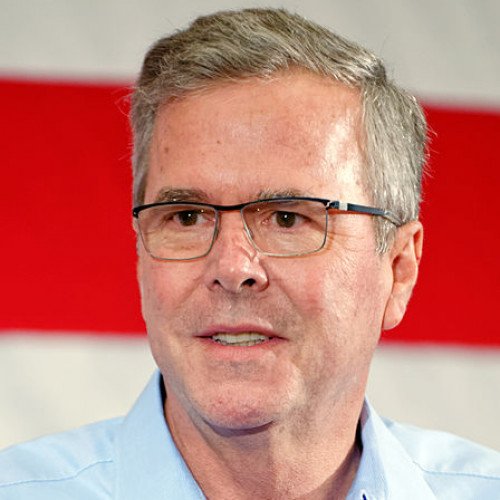
John Ellis "Jeb" Bush (born February 11, 1953) is an American politician who served as the 43rd Governor of Florida from 1999 to 2007. Bush, who grew up in Houston, is the second son of the late former President George H. W. Bush and former First Lady Barbara Bush, and a younger brother of former President George W. Bush. He graduated from Phillips Academy in Andover, Massachusetts, and attended the University of Texas at Austin, where he earned a degree in Latin American affairs. In 1980, he moved to Florida and pursued a career in real estate development, and in 1986 became Florida's Secretary of Commerce until 1988. At that time, he joined his father's successful campaign for the Presidency.
In 1994, Bush made his first run for office, losing the election for governor by less than two percentage points to the incumbent Lawton Chiles. Bush ran again in 1998 and defeated Lieutenant Governor Buddy MacKay with 55 percent of the vote. He ran for reelection in 2002, defeating Bill McBride and winning with 56 percent, to become Florida's first two-term Republican governor. During his eight years as governor, Bush pushed an ambitious Everglades conservation plan, supported caps for medical malpractice litigation, launched a Medicaid privatization pilot program, and instituted reforms to the state education system, including the issuance of vouchers and promoting school choice.
Bush announced his presidential candidacy on June 15, 2015. He suspended his campaign on February 20, 2016, shortly after the South Carolina primary and endorsed Senator Ted Cruz on March 23, 2016.



Comments (0)
No comments yet. Be the first to share your thoughts!