Robert Joseph Dole (born July 22, 1923) is an American retired politician, statesman, and attorney who represented Kansas in the U.S. Senate from 1969...
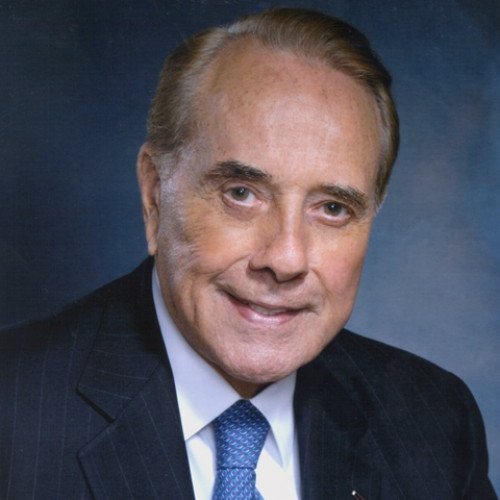
Robert Joseph Dole (born July 22, 1923) is an American retired politician, statesman, and attorney who represented Kansas in the U.S. Senate from 1969 to 1996. He was the Republican Leader of the United States Senate during the final 11 years of his tenure, including three nonconsecutive years as Senate Majority Leader. Prior to his 27 years in the Senate, he served in the U.S House of Representatives from 1961 to 1969. Dole was also the Republican presidential nominee in the 1996 election and the vice presidential nominee in the 1976 election.
Born in Russell, Kansas, Dole established a legal career in Russell after serving with distinction in the United States Army during World War II. After a stint as Russell County Attorney, he won election to the House of Representatives in 1960. In 1968, Dole was elected to the Senate, where he served as chairman of the Republican National Committee from 1971 to 1973 and chairman of the Senate Finance Committee from 1981 to 1985. He led the Senate Republicans from 1985 to his resignation in 1996, and served as Senate Majority Leader from 1985 to 1987 and from 1995 to 1996. In his role as Republican leader, he helped defeat President Bill Clinton's health care plan.
President Gerald Ford chose Dole as his running mate in the 1976 election after Vice President Nelson Rockefeller withdrew from seeking a full term. Ford was defeated by Democrat Jimmy Carter in the general election. Dole sought the Republican presidential nomination in 1980 but quickly dropped out of the race. He experienced more success in the 1988 Republican primaries but was defeated by Vice President George H. W. Bush. Dole won the Republican nomination in 1996 and selected Jack Kemp as his running mate. The Republican ticket lost in the general election to Bill Clinton, making Dole the first unsuccessful major party nominee for both president and vice president. He resigned from the Senate during the 1996 campaign and did not seek public office again after the election.
Though he retired from public office, Dole has remained active in public life since 1996. He appeared in numerous commercials and television programs and served on various councils. In 2012, Dole unsuccessfully advocated Senate ratification of the Convention on the Rights of Persons with Disabilities. He initially supported Jeb Bush in the 2016 Republican primaries, but later became the only former Republican presidential nominee to endorse Donald Trump, after Trump clinched the Republican nomination. Dole is currently a member of the advisory council of the Victims of Communism Memorial Foundation and special counsel at the Washington, D.C., office of law firm Alston & Bird. On January 17, 2018, Dole was awarded the Congressional Gold Medal. He is married to former U.S. Senator Elizabeth Dole of North Carolina.
VS
Charles B. Rangel
Charles Bernard Rangel (; born June 11, 1930) is an American politician who was a U.S. Representative for districts in New York from 1971 to 2017. A...
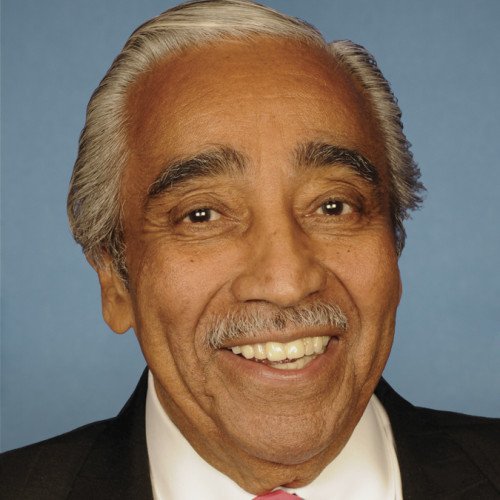
Charles Bernard Rangel (; born June 11, 1930) is an American politician who was a U.S. Representative for districts in New York from 1971 to 2017. A member of the Democratic Party, he was the second-longest serving incumbent member of the House of Representatives at the time of his retirement, serving continuously since 1971. As its most senior member, he was also the Dean of New York's congressional delegation. Rangel was the first African-American Chair of the influential House Ways and Means Committee. He is also a founding member of the Congressional Black Caucus.
Rangel was born in Harlem in Upper Manhattan and lives there to this day. He earned a Purple Heart and a Bronze Star for his service in the U.S. Army during the Korean War, where he led a group of soldiers out of a deadly Chinese army encirclement during the Battle of Kunu-ri in 1950. Rangel graduated from New York University in 1957 and St. John's University School of Law in 1960. He then worked as a private lawyer, Assistant U.S. Attorney, and legal counsel during the early-mid-1960s. He served two terms in the New York State Assembly, from 1967 to 1971, and then defeated long-time incumbent Congressman Adam Clayton Powell Jr. in a primary challenge on his way to being elected to the House of Representatives.
Once there, Rangel rose rapidly in the Democratic ranks, combining solidly liberal views with a pragmatic approach towards finding political and legislative compromises. His long-time concerns with battling the importation and effects of illegal drugs led to his becoming chair of the House Select Committee on Narcotics, where he helped define national policy on the issue during the 1980s. As one of Harlem's "Gang of Four", he also became a leader in New York City and State politics. He played a significant role in the creation of the 1995 Upper Manhattan Empowerment Zone Development Corporation and the national Empowerment Zone Act, which helped change the economic face of Harlem and other inner-city areas. Rangel is known both for his genial manner, with an ability to win over fellow legislators, and for his blunt speaking; he has long been outspoken about his views and has been arrested several times as part of political demonstrations. He was a strong opponent of the George W. Bush administration and the Iraq War, and he put forth proposals to reinstate the draft during the 2000s.
Beginning in 2008, Rangel faced a series of personal legal issues focusing on ethics violations and allegations of failures to abide by the tax laws. The House Ethics Committee focused on whether Rangel improperly rented multiple rent-stabilized New York apartments, improperly used his office in raising money for the Rangel Center at the City College of New York, and failed to disclose rental income from his villa in the Dominican Republic. In March 2010, Rangel stepped aside as Ways and Means Chair. In November 2010, the Ethics Committee found Rangel guilty of 11 counts of violating House ethics rules, and on December 2, 2010, the full House approved a sanction of censure against him. During the 2012 and 2014 elections, Rangel faced two strong primary challenges in a now primarily Hispanic district but prevailed. He did not run for re-election in 2016 and left office in January 2017.



Comments (0)
No comments yet. Be the first to share your thoughts!