Robert Joseph Dole (born July 22, 1923) is an American retired politician, statesman, and attorney who represented Kansas in the U.S. Senate from 1969...
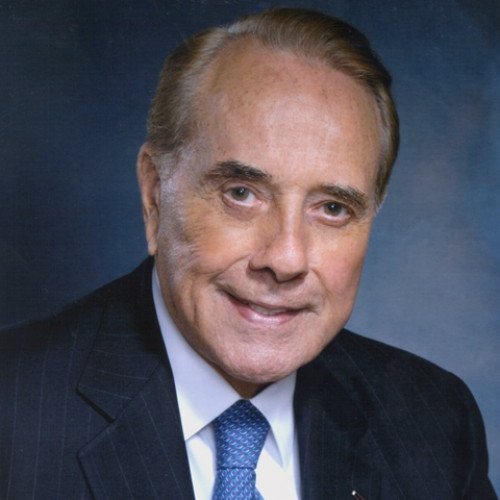
Robert Joseph Dole (born July 22, 1923) is an American retired politician, statesman, and attorney who represented Kansas in the U.S. Senate from 1969 to 1996. He was the Republican Leader of the United States Senate during the final 11 years of his tenure, including three nonconsecutive years as Senate Majority Leader. Prior to his 27 years in the Senate, he served in the U.S House of Representatives from 1961 to 1969. Dole was also the Republican presidential nominee in the 1996 election and the vice presidential nominee in the 1976 election.
Born in Russell, Kansas, Dole established a legal career in Russell after serving with distinction in the United States Army during World War II. After a stint as Russell County Attorney, he won election to the House of Representatives in 1960. In 1968, Dole was elected to the Senate, where he served as chairman of the Republican National Committee from 1971 to 1973 and chairman of the Senate Finance Committee from 1981 to 1985. He led the Senate Republicans from 1985 to his resignation in 1996, and served as Senate Majority Leader from 1985 to 1987 and from 1995 to 1996. In his role as Republican leader, he helped defeat President Bill Clinton's health care plan.
President Gerald Ford chose Dole as his running mate in the 1976 election after Vice President Nelson Rockefeller withdrew from seeking a full term. Ford was defeated by Democrat Jimmy Carter in the general election. Dole sought the Republican presidential nomination in 1980 but quickly dropped out of the race. He experienced more success in the 1988 Republican primaries but was defeated by Vice President George H. W. Bush. Dole won the Republican nomination in 1996 and selected Jack Kemp as his running mate. The Republican ticket lost in the general election to Bill Clinton, making Dole the first unsuccessful major party nominee for both president and vice president. He resigned from the Senate during the 1996 campaign and did not seek public office again after the election.
Though he retired from public office, Dole has remained active in public life since 1996. He appeared in numerous commercials and television programs and served on various councils. In 2012, Dole unsuccessfully advocated Senate ratification of the Convention on the Rights of Persons with Disabilities. He initially supported Jeb Bush in the 2016 Republican primaries, but later became the only former Republican presidential nominee to endorse Donald Trump, after Trump clinched the Republican nomination. Dole is currently a member of the advisory council of the Victims of Communism Memorial Foundation and special counsel at the Washington, D.C., office of law firm Alston & Bird. On January 17, 2018, Dole was awarded the Congressional Gold Medal. He is married to former U.S. Senator Elizabeth Dole of North Carolina.
VS
Joe Arpaio
Joseph Michael Arpaio (; born June 14, 1932) is an American former law enforcement officer and politician. He served as the 36th Sheriff of Maricopa C...
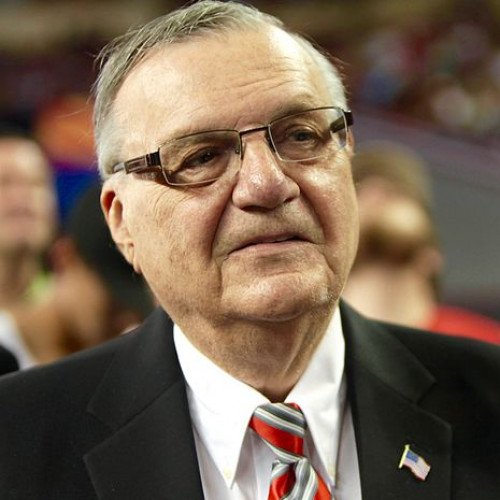
Joseph Michael Arpaio (; born June 14, 1932) is an American former law enforcement officer and politician. He served as the 36th Sheriff of Maricopa County, Arizona for 24 years, from 1993 to 2017, losing reelection to Democrat Paul Penzone in 2016.
Starting in 2005, Arpaio took an outspoken stance against illegal immigration, styling himself as "America's Toughest Sheriff". In 2010, he became a flashpoint for opposition to Arizona's SB1070 anti-illegal immigrant law, which was largely struck down by the Supreme Court of the United States. Arpaio is also known for investigating former U.S. President Barack Obama's birth certificate, and, as of 2018, he continued to claim without evidence that it was forged.Arpaio has been accused of numerous types of police misconduct, including abuse of power, misuse of funds, failure to investigate sex crimes, criminal negligence, abuse of suspects in custody, improper clearance of cases, unlawful enforcement of immigration laws, and election law violations. A Federal court monitor was appointed to oversee his office's operations because of complaints of racial profiling. The U.S. Department of Justice concluded that Arpaio oversaw the worst pattern of racial profiling in U.S. history, and subsequently filed suit against him for unlawful discriminatory police conduct. Arpaio and the MCSO were named as defendants in dozens of civil lawsuits brought by citizens arrested by Arpaio and his deputies alleging wrongful arrest, wrongful death, entrapment and other claims, costing taxpayers in Maricopa County over $140 million in litigation against Arpaio during his tenure as sheriff.Over the course of his career, Arpaio was the subject of several federal civil rights lawsuits. In one case, he was a defendant in a decade-long suit in which a federal court issued an injunction barring him from conducting further "immigration round-ups". A federal court subsequently found that after the order was issued, Arpaio's office continued to detain "persons for further investigation without reasonable suspicion that a crime has been or is being committed." In July 2017, he was convicted of criminal contempt of court, a crime for which he was pardoned by President Donald Trump on August 25, 2017. In a separate racial-profiling case which concluded in 2013, Arpaio and his subordinates were found to have unfairly targeted Hispanics in conducting traffic stops.Although Arpaio sought another term as Maricopa County Sheriff in 2016, the contempt of court conviction eroded much of his remaining political support, and he was defeated in the election by Paul Penzone, a Democrat who reversed many of Arpaio's policies after taking office. Arpaio was an unsuccessful candidate in Arizona's Republican primary election for U.S. Senate in 2018. On August 25, 2019, Arpaio issued a statement saying that he would run for sheriff of Maricopa County in 2020. He lost the August 2020 primary election.



Comments (0)
No comments yet. Be the first to share your thoughts!