Marco Antonio Rubio (born May 28, 1971) is an American politician serving as the senior United States senator from Florida. A Republican, he previousl...
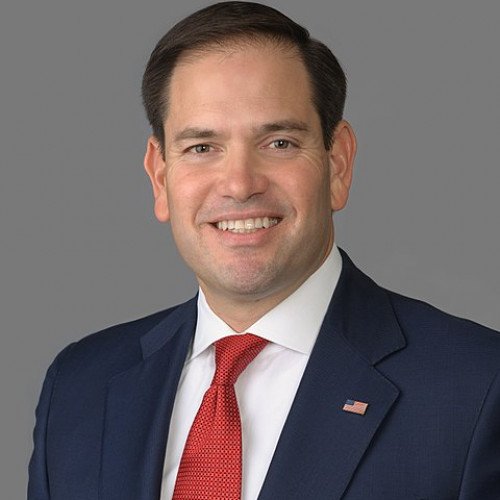
Marco Antonio Rubio (born May 28, 1971) is an American politician serving as the senior United States senator from Florida. A Republican, he previously served as speaker of the Florida House of Representatives. Rubio unsuccessfully sought the Republican nomination for president of the United States in 2016, winning presidential primaries in the State of Minnesota, the District of Columbia, and the Commonwealth of Puerto Rico.
Rubio is a Cuban American from Miami, Florida. After serving as a city commissioner for West Miami in the 1990s, he was elected to represent the 111th district in the Florida House of Representatives in 2000. Subsequently, he was elected speaker of the Florida House, and was Speaker for two years beginning in November 2006. Upon leaving the Florida legislature in 2008 due to term limits, Rubio taught at Florida International University.
Rubio successfully ran for the United States Senate in 2010. In April 2015, he announced that he would not seek re-election to the Senate, instead choosing to run for president. He suspended his campaign for president on March 15, 2016, after losing the Florida Republican primary to the eventual winner of the presidential election, Donald Trump. He then decided to run for re-election to the Senate, winning a second term later that year. Due to his influence on U.S. policies in regard to Latin America he has been described as a "virtual secretary of state for Latin America."
VS
Steve King
Steven Arnold King (born May 28, 1949) is an American politician and former businessman who served as the U.S. Representative for Iowa's 4th congressi...
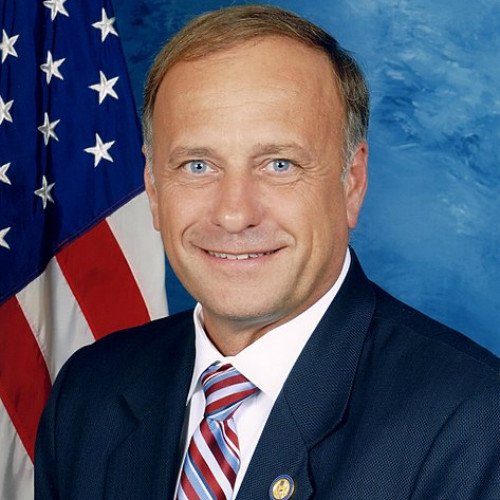
Steven Arnold King (born May 28, 1949) is an American politician and former businessman who served as the U.S. Representative for Iowa's 4th congressional district from 2003 to 2021. A member of the Republican Party, he represented Iowa's 5th congressional district until redistricting.
Born in 1949 in Storm Lake, Iowa, King attended Northwest Missouri State University from 1967 to 1970 but left without graduating. He founded a construction company in 1975 and worked in business and environmental study before seeking the Republican nomination for a seat in the Iowa Senate in 1996. He won the primary and the general election, and was reelected in 2000. In 2002 King was elected to the U.S. House of Representatives from Iowa's 5th congressional district after the incumbent, Tom Latham, was reassigned to the 4th district after redistricting. He was reelected four times before the 2010 United States Census removed the 5th district and placed King in the 4th, which he represented from 2013.
King is an opponent of immigration and multiculturalism, and has a long history of racist and anti-immigrant rhetoric and white-nationalist affiliations. The Washington Post described King as "the Congressman most openly affiliated with white nationalism." King has been criticized for alleged affiliation with white supremacist ideas, and has made controversial statements against immigrants, and supported European right-wing populist and far-right politicians accused of racism and Islamophobia.For much of King's congressional tenure, Republican politicians and officials were silent about his rhetoric, and frequently sought his endorsement and campaigned with him because of his popularity with northwest Iowa's conservative voters. Shortly before the 2018 election, the National Republican Congressional Committee withdrew funding for King's reelection campaign and its chairman, Steve Stivers, condemned King's conduct, although Iowa's Republican senators and governor continued to endorse him. King was reelected, but after a January 2019 interview in which he questioned the negative connotations of the terms "white nationalist" and "white supremacy", he was widely condemned by both parties, the media and public figures, and the Republican Steering Committee removed him from all House committee assignments. King ran for reelection but, campaign funding and support having declined, lost the June 2020 Republican primary to Randy Feenstra.



Comments (0)
No comments yet. Be the first to share your thoughts!