Maxine Moore Waters (née Carr, August 15, 1938) is an American politician serving as the U.S. Representative for California's 43rd congressional distr...
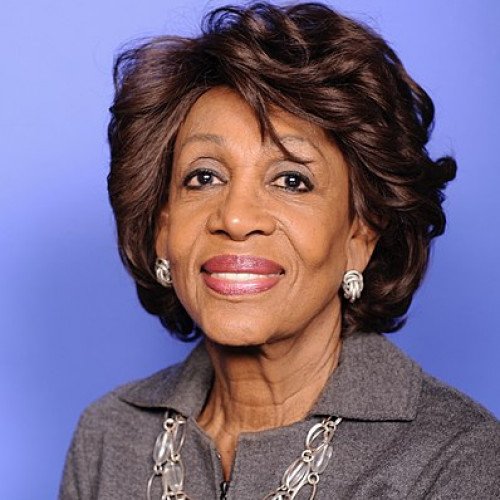
Maxine Moore Waters (née Carr, August 15, 1938) is an American politician serving as the U.S. Representative for California's 43rd congressional district since 1991. The district, numbered as the 29th district from 1991 to 1993 and as the 35th district from 1993 to 2013, includes much of southern Los Angeles, as well as portions of Gardena, Inglewood and Torrance.
A member of the Democratic Party, Waters is currently in her 15th term in the House. She is the most senior of the twelve black women currently serving in Congress, and she chaired the Congressional Black Caucus from 1997 to 1999. She is the second most senior member of the California congressional delegation after Nancy Pelosi. She is currently the chairwoman of the House Financial Services Committee.
Before becoming a U.S. Representative, Waters served in the California State Assembly, to which she was first elected in 1976. As an assemblywoman, she advocated divestment from South Africa's apartheid regime. In Congress, she has been an outspoken opponent of the Iraq War and has sharply criticized Republican Presidents George H. W. Bush, George W. Bush, and Donald Trump, as well as Democratic President Barack Obama.Waters was included in Time magazine's 100 Most Influential People of 2018.
VS
Henry Kissinger
Henry Alfred Kissinger (; German: [ˈkɪsɪŋɐ]; born Heinz Alfred Kissinger; May 27, 1923) is an American politician, diplomat, and geopolitical consult...
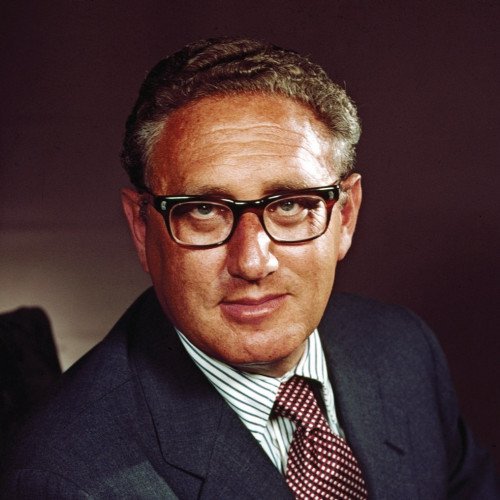
Henry Alfred Kissinger (; German: [ˈkɪsɪŋɐ]; born Heinz Alfred Kissinger; May 27, 1923) is an American politician, diplomat, and geopolitical consultant who served as United States Secretary of State and National Security Advisor under the presidential administrations of Richard Nixon and Gerald Ford. A Jewish refugee who fled Nazi Germany with his family in 1938, he became National Security Advisor in 1969 and U.S. Secretary of State in 1973. For his actions negotiating a ceasefire in Vietnam, Kissinger received the 1973 Nobel Peace Prize under controversial circumstances, with two members of the committee resigning in protest.A practitioner of Realpolitik, Kissinger played a prominent role in United States foreign policy between 1969 and 1977. During this period, he pioneered the policy of détente with the Soviet Union, orchestrated the opening of relations with China, engaged in what became known as shuttle diplomacy in the Middle East to end the Yom Kippur War, and negotiated the Paris Peace Accords, ending American involvement in the Vietnam War. Kissinger has also been associated with such controversial policies as U.S. involvement in the 1973 Chilean military coup, a "green light" to Argentina's military junta for their Dirty War, and U.S. support for Pakistan during the Bangladesh War despite the genocide being perpetrated by his allies. After leaving government, he formed Kissinger Associates, an international geopolitical consulting firm. Kissinger has written over a dozen books on diplomatic history and international relations.
Kissinger remains a controversial and polarizing figure in U.S. politics, both condemned as an alleged war criminal by many journalists, political activists, and human rights lawyers, and venerated as a highly effective U.S. Secretary of State by many prominent international relations scholars.



Comments (0)
No comments yet. Be the first to share your thoughts!