Charles Ellis Schumer (; born November 23, 1950) is an American politician serving as the Senate Majority Leader since January 20, 2021. A member of t...
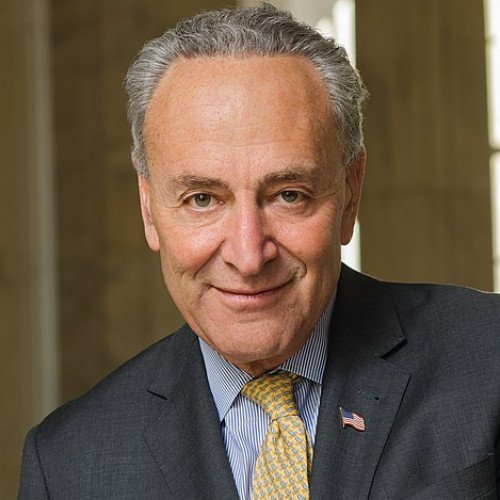
Charles Ellis Schumer (; born November 23, 1950) is an American politician serving as the Senate Majority Leader since January 20, 2021. A member of the Democratic Party, Schumer is the senior United States senator from New York, a seat to which he was first elected in 1998. He is the current dean of New York's congressional delegation.
A native of Brooklyn and a graduate of Harvard College and Harvard Law School, Schumer was a three-term member of the New York State Assembly from 1975 to 1980. Schumer served in the United States House of Representatives from 1981 to 1999, first representing New York's 16th congressional district before being redistricted to the 10th congressional district in 1983 and 9th congressional district ten years later. In 1998, Schumer was elected as a U.S. Senator after defeating three-term Republican incumbent Al D'Amato. He was subsequently reelected in 2004 with 71 percent of the vote, in 2010 with 66 percent of the vote, and in 2016 with 70 percent of the vote.
Schumer was chairman of the Democratic Senatorial Campaign Committee from 2005 to 2009, during which time he oversaw 14 Democratic gains in the Senate in the 2006 and 2008 elections. He was the third-ranking Democrat in the Senate, behind Senate Minority Leader Harry Reid and Minority Whip Dick Durbin. He served as Vice Chairman of the Democratic Caucus in the Senate from 2007 to 2017 and was chairman of the Senate Democratic Policy Committee from 2011 to 2017. Schumer won his fourth term in the Senate in 2016 and was then unanimously elected Democratic leader to succeed Harry Reid, who was retiring. In January 2021, Schumer became Senate Majority Leader, and the first Jewish leader of either chamber of Congress.
VS
Rick Perry
James Richard "Rick" Perry (born March 4, 1950) is an American politician who served as the 14th United States Secretary of Energy from 2017 to 2019 a...
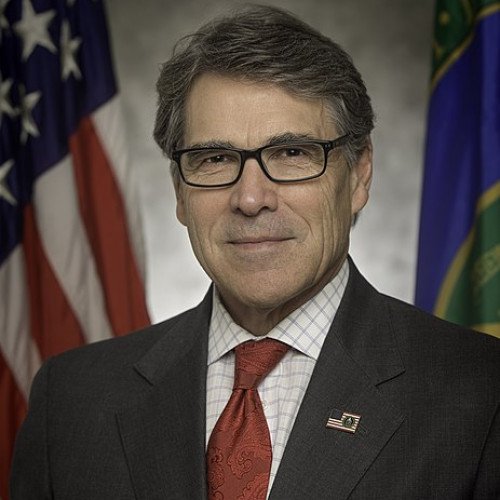
James Richard "Rick" Perry (born March 4, 1950) is an American politician who served as the 14th United States Secretary of Energy from 2017 to 2019 and as the 47th Governor of Texas from 2000 to 2015. Perry also ran unsuccessfully for the Republican nomination for President of the United States in the 2012 and 2016 elections.
Born into a family of cotton farmers in Haskell, Texas, Perry graduated from Texas A&M University in 1972 and entered into the United States Air Force, serving a five-year stint and achieving the rank of captain. After leaving the Air Force in 1977, Perry returned to Texas and entered politics, serving as a Democratic member of the Texas House of Representatives from 1985 to 1991. In 1989, Perry switched parties and became a Republican, and was elected Agriculture Commissioner of Texas the following year. In 1998, Perry was elected Lieutenant Governor of Texas, becoming the state's first Republican Lieutenant Governor since Reconstruction.
Perry assumed the governorship of Texas in December 2000, after Governor George W. Bush resigned following his election as President. Perry was re-elected Governor three times, becoming the longest-serving Governor in Texas history. As Governor, Perry identified as a staunch conservative, enacting conservative fiscal policies, restrictions on abortion and expanded gun rights. Long considered a potential presidential candidate, Perry officially announced his candidacy for the 2012 Republican nomination for President in August 2011. Perry initially performed well in polling and showed strong fundraising prowess, leading to him being considered a serious contender for the nomination, however his support declined following poor performances in debates and early primaries and he withdrew from the race in January 2012.Perry declined to run for re-election to a fourth term as Governor and left office in 2015, launching a second presidential campaign shortly after. Perry's second presidential campaign failed to garner substantial polling support, fundraising or media attention, leading to him withdrawing from the race after only three months. Perry was initially a vocal opponent of Donald Trump's 2016 campaign for President, however he later endorsed Trump after he secured the Republican nomination. After winning the presidency, Trump appointed Perry as Secretary of Energy and he was confirmed by the United States Senate in a 62–37 vote on March 2, 2017. On October 17, 2019, Perry reported to Trump that he intended to resign as Secretary of Energy at the end of the year. He left office on December 1, 2019.



Comments (0)
No comments yet. Be the first to share your thoughts!