Joseph Patrick Kennedy III (born October 4, 1980) is an American lawyer and politician who served as the U.S. Representative for Massachusetts's 4th c...
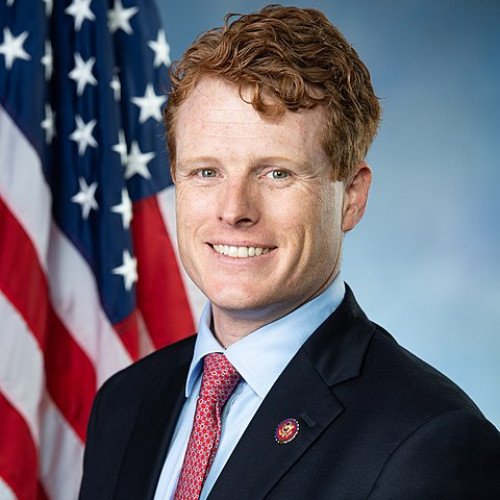
Joseph Patrick Kennedy III (born October 4, 1980) is an American lawyer and politician who served as the U.S. Representative for Massachusetts's 4th congressional district from 2013 to 2021. A member of the Democratic Party, he represented a district that extends from Boston's western suburbs to the state's South Coast. He worked as an assistant district attorney in the Cape and Islands and Middlesex County, Massachusetts, offices before his election to Congress.
A member of the Kennedy family, he is a son of U.S. Representative Joseph P. Kennedy II, a grandson of U.S. Senator and U.S. Attorney General Robert F. Kennedy, a grandnephew of U.S. President John F. Kennedy and U.S. Senator Ted Kennedy, and a great-grandson of U.S. Ambassador to the United Kingdom Joseph P. Kennedy Sr.
Born in Boston, Kennedy was raised in the area with his twin brother, Matthew Rauch Kennedy. After graduating from Stanford University with a bachelor's degree, he spent two years in the Dominican Republic as a member of the Peace Corps before earning a Juris Doctor at Harvard Law School in 2009. He resigned from his role as assistant district attorney in early 2012 to run for the U.S. House of Representatives seat held by the retiring Barney Frank. Kennedy was sworn into office in January 2013 and sat on the House Committee on Energy and Commerce.
In 2020, rather than run for reelection to his House seat, Kennedy unsuccessfully challenged Senator Ed Markey for the Democratic nomination in the Massachusetts U.S. Senate election. Upon the conclusion of his term on January 3, 2021, he left Congress.
VS
Joe Lieberman
Joseph Isadore Lieberman (; born February 24, 1942) is an American politician, lobbyist and attorney who served as a United States Senator from Connec...
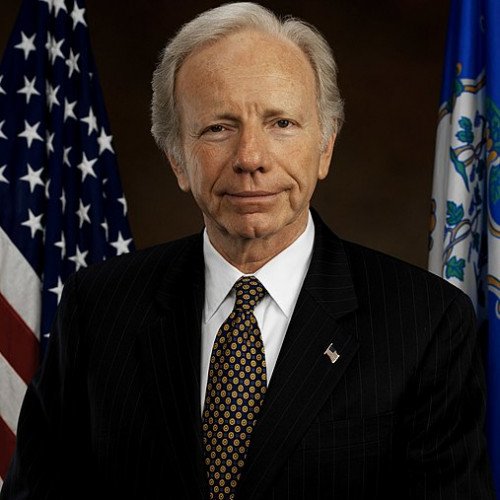
Joseph Isadore Lieberman (; born February 24, 1942) is an American politician, lobbyist and attorney who served as a United States Senator from Connecticut from 1989 to 2013. A former member of the Democratic Party, he was its nominee for Vice President of the United States in the 2000 election. During his final term in office he was officially listed as an independent Democrat and caucused with and chaired committees for the Democratic Party.
Lieberman was elected as a "Reform Democrat" in 1970 to the Connecticut Senate, where he served three terms as Majority Leader. After an unsuccessful bid for the U.S. House of Representatives in 1980, he served as state Attorney General from 1983 to 1989. He narrowly defeated Republican incumbent Lowell Weicker in 1988 to win election to the U.S. Senate, and was re-elected in 1994, 2000, and 2006. He was the Democratic nominee for Vice President in the 2000 United States presidential election, running with presidential nominee and then Vice President Al Gore, and becoming the first Jewish candidate on a major American political party presidential ticket.In the 2000 presidential election, Gore and Lieberman won the popular vote by a margin of more than 500,000 votes, but lost the deciding Electoral College to the Republican George W. Bush/Dick Cheney ticket 271–266. He also unsuccessfully sought the Democratic nomination in the 2004 presidential election.
During his Senate re-election bid in 2006, Lieberman lost the Democratic Party primary election, but won re-election in the general election as a third party candidate under the "Connecticut for Lieberman" party label. Never a member of that party, he remained a registered Democrat while he ran.Lieberman was officially listed in Senate records for the 110th and 111th Congresses as an Independent Democrat, and sat as part of the Senate Democratic Caucus. However, after his speech at the 2008 Republican National Convention in which he endorsed John McCain for president, he no longer attended Democratic Caucus leadership strategy meetings or policy lunches. On November 5, 2008, he met with Senate Majority Leader Harry Reid to discuss his future role with the Democratic Party. Ultimately, the Senate Democratic Caucus voted to allow him to keep the chairmanship of the Senate Committee on Homeland Security and Governmental Affairs. Subsequently, he announced that he would continue to caucus with the Democrats. Before the 2016 election, he endorsed Hillary Clinton for president.
As Senator, Lieberman introduced and championed the Don't Ask, Don't Tell Repeal Act of 2010 and legislation that led to the creation of the Department of Homeland Security. During debate on the Affordable Care Act (ACA), as the crucial 60th vote needed to pass the legislation, his opposition to the public health insurance option was critical to its removal from the resulting bill signed by President Barack Obama.



Comments (0)
No comments yet. Be the first to share your thoughts!