John Forbes Kerry (born December 11, 1943) is an American politician and diplomat serving as the United States Special Presidential Envoy for Climate....
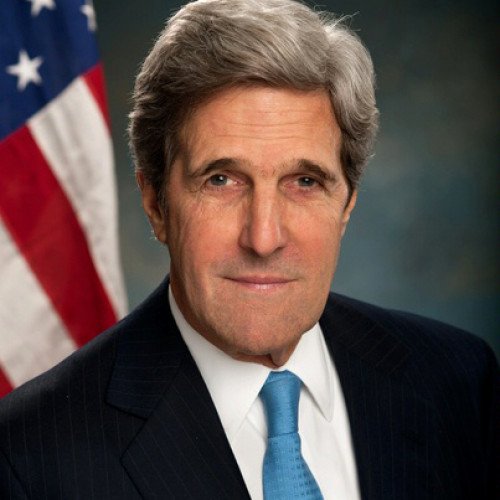
John Forbes Kerry (born December 11, 1943) is an American politician and diplomat serving as the United States Special Presidential Envoy for Climate. He previously served as the 68th United States Secretary of State from 2013 to 2017. An attorney and former naval officer, Kerry first drew public attention as a decorated Vietnam veteran turned anti-war activist. He went on to serve as a prosecutor and as Lieutenant Governor of Massachusetts, before serving as United States Senator from Massachusetts from 1985 to 2013. A member of the Democratic Party, he was the Democratic nominee for President of the United States in the 2004 election, which he lost to incumbent President George W. Bush.
Kerry grew up as a military brat in Massachusetts and Washington, D.C. before attending boarding school in Massachusetts and New Hampshire. In 1966, after graduating from Yale University, Kerry enlisted in the United States Naval Reserve, ultimately attaining the rank of lieutenant. From 1968 to 1969, during the Vietnam War, he served an abbreviated four-month tour of duty in South Vietnam. While serving as the commanding officer of a Swift boat, Kerry sustained three wounds in combat with the Viet Cong, earning three Purple Heart Medals. Kerry was awarded the Silver Star Medal and the Bronze Star Medal for valorous conduct in separate military engagements. After completing his active military service, Kerry returned to the United States and became an outspoken opponent of the Vietnam War. He gained national recognition as an anti-war activist, serving as a spokesperson for the Vietnam Veterans Against the War organization. Kerry testified in the Fulbright Hearings before the Senate Committee on Foreign Relations, where he described the United States government's policy in Vietnam as the cause of war crimes.
In 1972, Kerry entered electoral politics as a Democratic candidate for the United States House of Representatives in Massachusetts' 5th congressional district. Kerry won the Democratic nomination but was defeated in the general election by his Republican opponent. He subsequently worked as a radio talk show host in Lowell and as the executive director of an advocacy organization while attending the Boston College School of Law. After obtaining his juris doctor in 1976, Kerry served from 1977 to 1979 as the First Assistant District Attorney of Middlesex County, where he tried criminal cases and managed the district attorney's office. After a period in private legal practice, Kerry was elected Lieutenant Governor of Massachusetts in 1982. In 1984, Kerry was elected to the United States Senate. As a member of the Senate Committee on Foreign Relations, he led a series of hearings investigating narcotics trafficking in Latin America, which exposed aspects of the Iran–Contra affair. He was reelected to additional terms in 1990, 1996, 2002 and 2008.
Kerry won the Democratic party presidential nomination in 2004, alongside vice presidential nominee and North Carolina Senator John Edwards. Kerry campaigned as a critic of Republican President George W. Bush's prosecution of the Iraq War and advocated a liberal domestic policy. Kerry lost the Electoral College and the popular vote by narrow margins, winning 251 electors to Bush's 286 and 48.3% of the popular vote to Bush's 50.7%. Kerry remained in the Senate and chaired the Committee on Foreign Relations from 2009 to 2013. In January 2013, he was nominated by President Barack Obama to succeed outgoing Secretary of State Hillary Clinton, and was confirmed by his Senate colleagues on a vote of 94–3. As Secretary of State, Kerry initiated the 2013–2014 Israeli–Palestinian peace talks and negotiated landmark agreements restricting the nuclear program of Iran, including the 2013 Joint Plan of Action and the 2015 Joint Comprehensive Plan of Action. In 2015, Kerry signed the Paris Agreement on climate change on behalf of the United States. Kerry served as Secretary of State until the end of the Obama administration in January 2017, when he retired from government service. Kerry has remained active in public affairs as a vocal opponent of former President Donald Trump and as a supporter of President Joe Biden.
On November 23, 2020, President-elect Joe Biden announced that Kerry will serve as the U.S. Special Presidential Envoy for Climate in the Biden administration.
VS
Rick Perry
James Richard "Rick" Perry (born March 4, 1950) is an American politician who served as the 14th United States Secretary of Energy from 2017 to 2019 a...
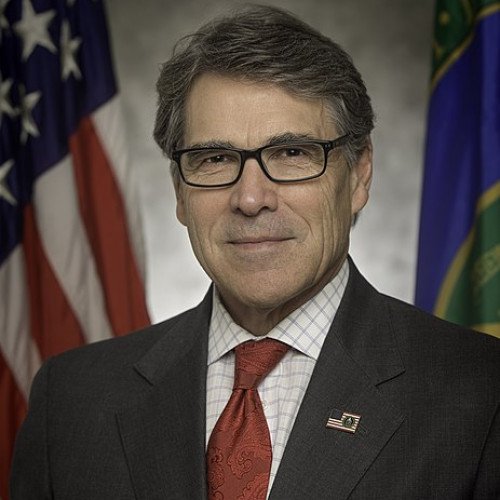
James Richard "Rick" Perry (born March 4, 1950) is an American politician who served as the 14th United States Secretary of Energy from 2017 to 2019 and as the 47th Governor of Texas from 2000 to 2015. Perry also ran unsuccessfully for the Republican nomination for President of the United States in the 2012 and 2016 elections.
Born into a family of cotton farmers in Haskell, Texas, Perry graduated from Texas A&M University in 1972 and entered into the United States Air Force, serving a five-year stint and achieving the rank of captain. After leaving the Air Force in 1977, Perry returned to Texas and entered politics, serving as a Democratic member of the Texas House of Representatives from 1985 to 1991. In 1989, Perry switched parties and became a Republican, and was elected Agriculture Commissioner of Texas the following year. In 1998, Perry was elected Lieutenant Governor of Texas, becoming the state's first Republican Lieutenant Governor since Reconstruction.
Perry assumed the governorship of Texas in December 2000, after Governor George W. Bush resigned following his election as President. Perry was re-elected Governor three times, becoming the longest-serving Governor in Texas history. As Governor, Perry identified as a staunch conservative, enacting conservative fiscal policies, restrictions on abortion and expanded gun rights. Long considered a potential presidential candidate, Perry officially announced his candidacy for the 2012 Republican nomination for President in August 2011. Perry initially performed well in polling and showed strong fundraising prowess, leading to him being considered a serious contender for the nomination, however his support declined following poor performances in debates and early primaries and he withdrew from the race in January 2012.Perry declined to run for re-election to a fourth term as Governor and left office in 2015, launching a second presidential campaign shortly after. Perry's second presidential campaign failed to garner substantial polling support, fundraising or media attention, leading to him withdrawing from the race after only three months. Perry was initially a vocal opponent of Donald Trump's 2016 campaign for President, however he later endorsed Trump after he secured the Republican nomination. After winning the presidency, Trump appointed Perry as Secretary of Energy and he was confirmed by the United States Senate in a 62–37 vote on March 2, 2017. On October 17, 2019, Perry reported to Trump that he intended to resign as Secretary of Energy at the end of the year. He left office on December 1, 2019.



Comments (0)
No comments yet. Be the first to share your thoughts!