John Forbes Kerry (born December 11, 1943) is an American politician and diplomat serving as the United States Special Presidential Envoy for Climate....
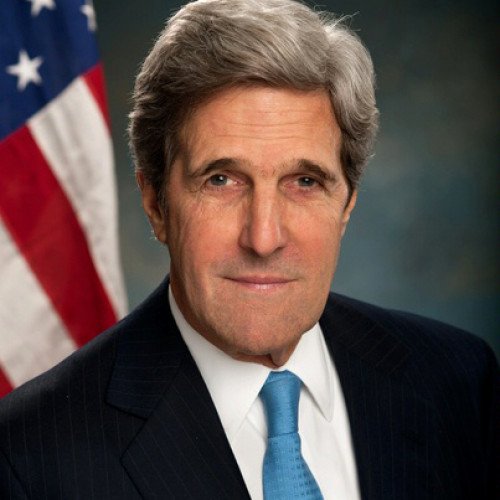
John Forbes Kerry (born December 11, 1943) is an American politician and diplomat serving as the United States Special Presidential Envoy for Climate. He previously served as the 68th United States Secretary of State from 2013 to 2017. An attorney and former naval officer, Kerry first drew public attention as a decorated Vietnam veteran turned anti-war activist. He went on to serve as a prosecutor and as Lieutenant Governor of Massachusetts, before serving as United States Senator from Massachusetts from 1985 to 2013. A member of the Democratic Party, he was the Democratic nominee for President of the United States in the 2004 election, which he lost to incumbent President George W. Bush.
Kerry grew up as a military brat in Massachusetts and Washington, D.C. before attending boarding school in Massachusetts and New Hampshire. In 1966, after graduating from Yale University, Kerry enlisted in the United States Naval Reserve, ultimately attaining the rank of lieutenant. From 1968 to 1969, during the Vietnam War, he served an abbreviated four-month tour of duty in South Vietnam. While serving as the commanding officer of a Swift boat, Kerry sustained three wounds in combat with the Viet Cong, earning three Purple Heart Medals. Kerry was awarded the Silver Star Medal and the Bronze Star Medal for valorous conduct in separate military engagements. After completing his active military service, Kerry returned to the United States and became an outspoken opponent of the Vietnam War. He gained national recognition as an anti-war activist, serving as a spokesperson for the Vietnam Veterans Against the War organization. Kerry testified in the Fulbright Hearings before the Senate Committee on Foreign Relations, where he described the United States government's policy in Vietnam as the cause of war crimes.
In 1972, Kerry entered electoral politics as a Democratic candidate for the United States House of Representatives in Massachusetts' 5th congressional district. Kerry won the Democratic nomination but was defeated in the general election by his Republican opponent. He subsequently worked as a radio talk show host in Lowell and as the executive director of an advocacy organization while attending the Boston College School of Law. After obtaining his juris doctor in 1976, Kerry served from 1977 to 1979 as the First Assistant District Attorney of Middlesex County, where he tried criminal cases and managed the district attorney's office. After a period in private legal practice, Kerry was elected Lieutenant Governor of Massachusetts in 1982. In 1984, Kerry was elected to the United States Senate. As a member of the Senate Committee on Foreign Relations, he led a series of hearings investigating narcotics trafficking in Latin America, which exposed aspects of the Iran–Contra affair. He was reelected to additional terms in 1990, 1996, 2002 and 2008.
Kerry won the Democratic party presidential nomination in 2004, alongside vice presidential nominee and North Carolina Senator John Edwards. Kerry campaigned as a critic of Republican President George W. Bush's prosecution of the Iraq War and advocated a liberal domestic policy. Kerry lost the Electoral College and the popular vote by narrow margins, winning 251 electors to Bush's 286 and 48.3% of the popular vote to Bush's 50.7%. Kerry remained in the Senate and chaired the Committee on Foreign Relations from 2009 to 2013. In January 2013, he was nominated by President Barack Obama to succeed outgoing Secretary of State Hillary Clinton, and was confirmed by his Senate colleagues on a vote of 94–3. As Secretary of State, Kerry initiated the 2013–2014 Israeli–Palestinian peace talks and negotiated landmark agreements restricting the nuclear program of Iran, including the 2013 Joint Plan of Action and the 2015 Joint Comprehensive Plan of Action. In 2015, Kerry signed the Paris Agreement on climate change on behalf of the United States. Kerry served as Secretary of State until the end of the Obama administration in January 2017, when he retired from government service. Kerry has remained active in public affairs as a vocal opponent of former President Donald Trump and as a supporter of President Joe Biden.
On November 23, 2020, President-elect Joe Biden announced that Kerry will serve as the U.S. Special Presidential Envoy for Climate in the Biden administration.
VS
Michael Bloomberg
Michael Rubens Bloomberg (born February 14, 1942) is an American businessman, politician, philanthropist, and author. He is the majority owner and co...
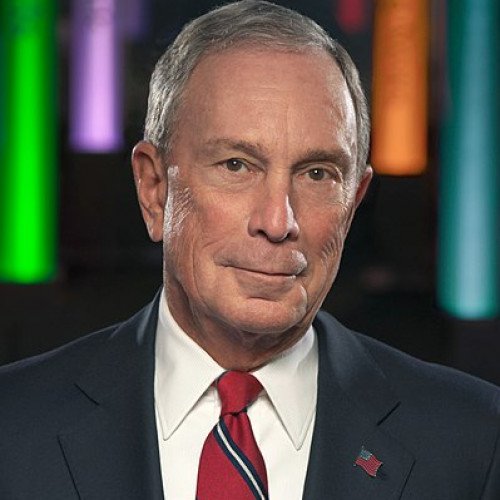
Michael Rubens Bloomberg (born February 14, 1942) is an American businessman, politician, philanthropist, and author. He is the majority owner and co-founder of Bloomberg L.P. He was the mayor of New York City from 2002 to 2013, and was a candidate for the 2020 Democratic nomination for president of the United States.
Bloomberg grew up in Medford, Massachusetts, and graduated from Johns Hopkins University and Harvard Business School. He began his career at the securities brokerage Salomon Brothers before forming his own company in 1981. That company, Bloomberg L.P., is a financial information, software and media firm that is known for its Bloomberg Terminal. Bloomberg spent the next twenty years as its chairman and CEO. In 2020, Forbes ranked him as the sixteenth-richest person in the world, with an estimated net worth of $48 billion as of April 7, 2020 and as of July 21, 2020, Bloomberg ranked 8th in Forbes 400 with net worth $60.1 billion. Since signing The Giving Pledge, Bloomberg has given away $8.2 billion.
Bloomberg was elected the 108th mayor of New York City. First elected in 2001, he held office for three consecutive terms, winning re-election in 2005 and in 2009. Pursuing socially liberal and fiscally moderate policies, Bloomberg developed a technocratic managerial style. After a brief stint as a full-time philanthropist, he re-assumed the position of CEO at Bloomberg L.P. by the end of 2014.
As mayor of New York, Bloomberg established public charter schools, rebuilt urban infrastructure, and supported gun control, public health initiatives, and environmental protections. He also led a rezoning of large areas of the city, which facilitated massive and widespread new commercial and residential construction after the September 11 attacks. Bloomberg is considered to have had far-reaching influence on the politics, business sector, and culture of New York City during his three terms as mayor. He has also faced significant criticism for his expansion of the city's stop and frisk program, support for which he reversed with an apology before his 2020 presidential run.In November 2019, Bloomberg officially launched his campaign for the Democratic nomination for president of the United States in the 2020 election. He ended his campaign in March 2020, after having won only 61 delegates. Bloomberg self-funded $935 million for his candidacy, which set the record for the most expensive U.S. presidential primary campaign.



Comments (0)
No comments yet. Be the first to share your thoughts!