John Forbes Kerry (born December 11, 1943) is an American politician and diplomat serving as the United States Special Presidential Envoy for Climate....
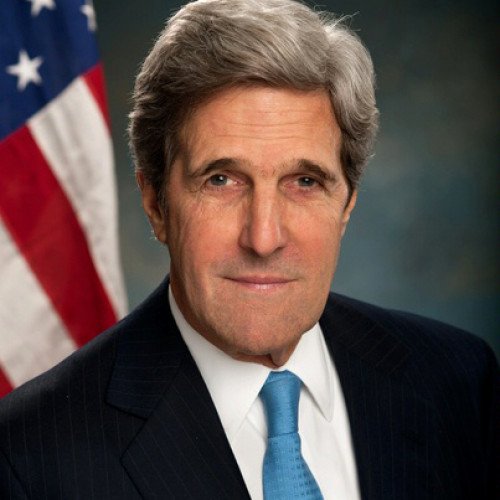
John Forbes Kerry (born December 11, 1943) is an American politician and diplomat serving as the United States Special Presidential Envoy for Climate. He previously served as the 68th United States Secretary of State from 2013 to 2017. An attorney and former naval officer, Kerry first drew public attention as a decorated Vietnam veteran turned anti-war activist. He went on to serve as a prosecutor and as Lieutenant Governor of Massachusetts, before serving as United States Senator from Massachusetts from 1985 to 2013. A member of the Democratic Party, he was the Democratic nominee for President of the United States in the 2004 election, which he lost to incumbent President George W. Bush.
Kerry grew up as a military brat in Massachusetts and Washington, D.C. before attending boarding school in Massachusetts and New Hampshire. In 1966, after graduating from Yale University, Kerry enlisted in the United States Naval Reserve, ultimately attaining the rank of lieutenant. From 1968 to 1969, during the Vietnam War, he served an abbreviated four-month tour of duty in South Vietnam. While serving as the commanding officer of a Swift boat, Kerry sustained three wounds in combat with the Viet Cong, earning three Purple Heart Medals. Kerry was awarded the Silver Star Medal and the Bronze Star Medal for valorous conduct in separate military engagements. After completing his active military service, Kerry returned to the United States and became an outspoken opponent of the Vietnam War. He gained national recognition as an anti-war activist, serving as a spokesperson for the Vietnam Veterans Against the War organization. Kerry testified in the Fulbright Hearings before the Senate Committee on Foreign Relations, where he described the United States government's policy in Vietnam as the cause of war crimes.
In 1972, Kerry entered electoral politics as a Democratic candidate for the United States House of Representatives in Massachusetts' 5th congressional district. Kerry won the Democratic nomination but was defeated in the general election by his Republican opponent. He subsequently worked as a radio talk show host in Lowell and as the executive director of an advocacy organization while attending the Boston College School of Law. After obtaining his juris doctor in 1976, Kerry served from 1977 to 1979 as the First Assistant District Attorney of Middlesex County, where he tried criminal cases and managed the district attorney's office. After a period in private legal practice, Kerry was elected Lieutenant Governor of Massachusetts in 1982. In 1984, Kerry was elected to the United States Senate. As a member of the Senate Committee on Foreign Relations, he led a series of hearings investigating narcotics trafficking in Latin America, which exposed aspects of the Iran–Contra affair. He was reelected to additional terms in 1990, 1996, 2002 and 2008.
Kerry won the Democratic party presidential nomination in 2004, alongside vice presidential nominee and North Carolina Senator John Edwards. Kerry campaigned as a critic of Republican President George W. Bush's prosecution of the Iraq War and advocated a liberal domestic policy. Kerry lost the Electoral College and the popular vote by narrow margins, winning 251 electors to Bush's 286 and 48.3% of the popular vote to Bush's 50.7%. Kerry remained in the Senate and chaired the Committee on Foreign Relations from 2009 to 2013. In January 2013, he was nominated by President Barack Obama to succeed outgoing Secretary of State Hillary Clinton, and was confirmed by his Senate colleagues on a vote of 94–3. As Secretary of State, Kerry initiated the 2013–2014 Israeli–Palestinian peace talks and negotiated landmark agreements restricting the nuclear program of Iran, including the 2013 Joint Plan of Action and the 2015 Joint Comprehensive Plan of Action. In 2015, Kerry signed the Paris Agreement on climate change on behalf of the United States. Kerry served as Secretary of State until the end of the Obama administration in January 2017, when he retired from government service. Kerry has remained active in public affairs as a vocal opponent of former President Donald Trump and as a supporter of President Joe Biden.
On November 23, 2020, President-elect Joe Biden announced that Kerry will serve as the U.S. Special Presidential Envoy for Climate in the Biden administration.
VS
Henry Kissinger
Henry Alfred Kissinger (; German: [ˈkɪsɪŋɐ]; born Heinz Alfred Kissinger; May 27, 1923) is an American politician, diplomat, and geopolitical consult...
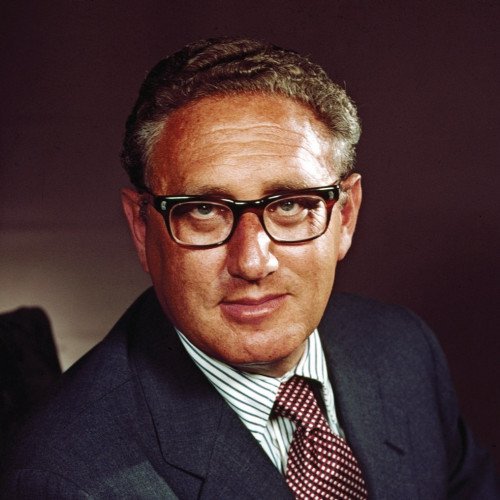
Henry Alfred Kissinger (; German: [ˈkɪsɪŋɐ]; born Heinz Alfred Kissinger; May 27, 1923) is an American politician, diplomat, and geopolitical consultant who served as United States Secretary of State and National Security Advisor under the presidential administrations of Richard Nixon and Gerald Ford. A Jewish refugee who fled Nazi Germany with his family in 1938, he became National Security Advisor in 1969 and U.S. Secretary of State in 1973. For his actions negotiating a ceasefire in Vietnam, Kissinger received the 1973 Nobel Peace Prize under controversial circumstances, with two members of the committee resigning in protest.A practitioner of Realpolitik, Kissinger played a prominent role in United States foreign policy between 1969 and 1977. During this period, he pioneered the policy of détente with the Soviet Union, orchestrated the opening of relations with China, engaged in what became known as shuttle diplomacy in the Middle East to end the Yom Kippur War, and negotiated the Paris Peace Accords, ending American involvement in the Vietnam War. Kissinger has also been associated with such controversial policies as U.S. involvement in the 1973 Chilean military coup, a "green light" to Argentina's military junta for their Dirty War, and U.S. support for Pakistan during the Bangladesh War despite the genocide being perpetrated by his allies. After leaving government, he formed Kissinger Associates, an international geopolitical consulting firm. Kissinger has written over a dozen books on diplomatic history and international relations.
Kissinger remains a controversial and polarizing figure in U.S. politics, both condemned as an alleged war criminal by many journalists, political activists, and human rights lawyers, and venerated as a highly effective U.S. Secretary of State by many prominent international relations scholars.



Comments (0)
No comments yet. Be the first to share your thoughts!