Andrew M. Yang (born January 13, 1975) is an American entrepreneur, politician, philanthropist and Democratic candidate for New York City mayor. Orig...
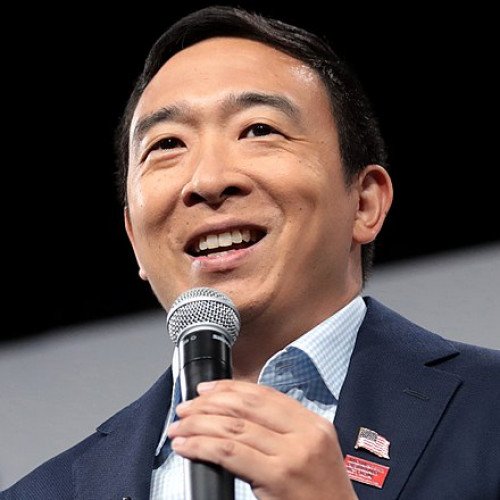
Andrew M. Yang (born January 13, 1975) is an American entrepreneur, politician, philanthropist and Democratic candidate for New York City mayor. Originally a lawyer, Yang began working in startups and early stage growth companies as a founder or executive from 2000 to 2009. In 2011, he founded Venture for America (VFA), a nonprofit organization focused on creating jobs in cities struggling to recover from the Great Recession. He ran in the 2020 Democratic presidential primaries, and is running in the 2021 New York City mayoral election.
The son of immigrants from Taiwan, Yang was born and raised in New York. He attended Brown University and then Columbia Law School. Dissatisfied with his work as an attorney, Yang began working for startups during the dot-com bubble before spending a decade as an executive at test preparation company Manhattan Prep. In 2011, Yang founded VFA, which recruits top college graduates into a two-year fellowship program at startups in developing cities across the United States. The Obama administration selected him in 2011 as a "Champion of Change" and in 2015 as a "Presidential Ambassador for Global Entrepreneurship." Yang left VFA in 2017 to focus on his presidential campaign. In 2018, he authored The War on Normal People, which outlines several of his campaign's central ideas.
On November 6, 2017, Yang filed with the Federal Election Commission (FEC) to run for President of the United States in the 2020 election. Yang's campaign largely focused on responding to the rapid development of automation, which is increasingly leading to workforce challenges and economic instability in the United States. His signature policy was the "Freedom Dividend," a universal basic income (UBI) of $1,000 a month to every American adult as a response to job displacement by automation, one of the primary factors that he claims led to Donald Trump's election in 2016. Considered a dark horse candidate throughout much of the primary, Yang received significant popularity online, with The New York Times calling him "The Internet's Favorite Candidate". News outlets described Yang as the most surprising candidate of the 2020 election cycle, going from a relative unknown to a major competitor in the race. Yang qualified for and participated in seven of the first eight Democratic debates, and has been credited with elevating discussions on UBI, automation, and autism to the national level, as well as for engaging Asian Americans in presidential politics.Yang's campaign was noted for its happy-go-lucky and "tech-friendly" nature. His supporters, informally known as the "Yang Gang", included several high-profile celebrity endorsements and were noted for their ideological and political diversity. Yang suspended his campaign on February 11, 2020, shortly after the New Hampshire primary, pledging that he and his movement are "just getting started." Following his campaign's end, Yang joined CNN as a political commentator, announced the creation of the political nonprofit organization Humanity Forward, and is running for the Democratic nomination in the 2021 New York City mayoral election.
VS
Carol Moseley Braun
Carol Elizabeth Moseley Braun, also sometimes Moseley-Braun (born August 16, 1947), is an American diplomat, politician and lawyer who represented Ill...
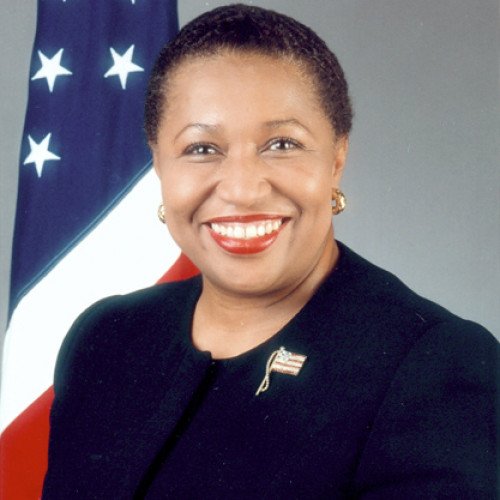
Carol Elizabeth Moseley Braun, also sometimes Moseley-Braun (born August 16, 1947), is an American diplomat, politician and lawyer who represented Illinois in the United States Senate from 1993 to 1999. Prior to her Senate tenure, Moseley Braun was a member of the Illinois House of Representatives from 1979 to 1988 and served as Cook County Recorder of Deeds from 1988 to 1992. She was elected to the U.S. Senate in 1992 after defeating Senator Alan Dixon in a Democratic primary. Moseley Braun served one term in the Senate and was defeated by Republican Peter Fitzgerald in 1998.
Following her Senate tenure, Moseley Braun served as the United States Ambassador to New Zealand and Samoa from 1999 to 2001. She was a candidate for the Democratic nomination in the 2004 U.S. presidential election; she withdrew from the race prior to the Iowa caucuses. In November 2010, Moseley Braun began a campaign for Mayor of Chicago to replace retiring incumbent Richard M. Daley. She placed fourth in a field of six candidates, losing the February 2011 election to Rahm Emanuel.
Moseley Braun was the first African-American female elected to the U.S. Senate, the first African-American U.S. Senator from the Democratic Party, the first woman to defeat an incumbent U.S. Senator in an election, and the first female U.S. Senator from Illinois.



Comments (0)
No comments yet. Be the first to share your thoughts!