Japan (Japanese: 日本, Nippon [ɲippoꜜɴ] (listen) or Nihon [ɲihoꜜɴ] (listen)) is an island country in East Asia, located in the northwest Pacific Ocean...
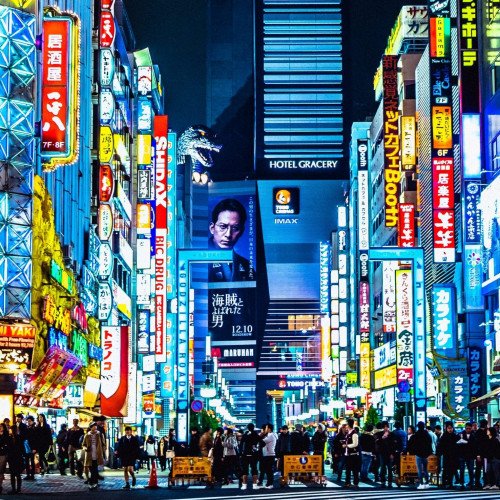
Japan (Japanese: 日本, Nippon [ɲippoꜜɴ] (listen) or Nihon [ɲihoꜜɴ] (listen)) is an island country in East Asia, located in the northwest Pacific Ocean. It is bordered on the west by the Sea of Japan, and extends from the Sea of Okhotsk in the north toward the East China Sea and Taiwan in the south. Part of the Ring of Fire, Japan spans an archipelago of 6852 islands covering 377,975 square kilometers (145,937 sq mi); the five main islands are Hokkaido, Honshu, Shikoku, Kyushu, and Okinawa. Tokyo is Japan's capital and largest city; other major cities include Yokohama, Osaka, Nagoya, Sapporo, Fukuoka, Kobe, and Kyoto.
Japan is the eleventh-most populous country in the world, as well as one of the most densely populated and urbanized. About three-fourths of the country's terrain is mountainous, concentrating its population of 125.62 million on narrow coastal plains. Japan is divided into 47 administrative prefectures and eight traditional regions. The Greater Tokyo Area is the most populous metropolitan area in the world, with more than 37.4 million residents.
Japan has been inhabited since the Upper Paleolithic period (30,000 BC), though the first mentions of the archipelago appear in Chinese chronicles from the 1st century AD. Between the 4th and 9th centuries, the kingdoms of Japan became unified under an emperor and his imperial court based in Heian-kyō. Beginning in the 12th century, political power was held by a series of military dictators (shōgun) and feudal lords (daimyō), and enforced by a class of warrior nobility (samurai). After a century-long period of civil war, the country was reunified in 1603 under the Tokugawa shogunate, which enacted an isolationist foreign policy. In 1854, a United States fleet forced Japan to open trade to the West, which led to the end of the shogunate and the restoration of imperial power in 1868. In the Meiji period, the Empire of Japan adopted a Western-styled constitution and pursued a program of industrialization and modernization. In 1937, Japan invaded China; in 1941, it entered World War II as an Axis power. After suffering defeat in the Pacific War and two atomic bombings, Japan surrendered in 1945 and came under a seven-year Allied occupation, during which it adopted a new constitution. Since 1947, Japan has maintained a unitary parliamentary constitutional monarchy with a bicameral legislature, the National Diet.
Japan is a great power and a member of numerous international organizations, including the United Nations (since 1956), the OECD, and the Group of Seven. Although it has renounced its right to declare war, the country maintains Self-Defense Forces that are ranked as the world's fourth-most powerful military. After World War II, Japan experienced high economic growth, becoming the second-largest economy in the world by 1990 before being surpassed by China in 2010. Despite stagnant growth since the Lost Decade, the country's economy remains the third-largest by nominal GDP and the fourth-largest by PPP. A leader in the automotive and electronics industries, Japan has made significant contributions to science and technology. Ranked the second-highest country on the Human Development Index in Asia after Singapore, Japan has the world's second-highest life expectancy, though it is experiencing a decline in population. The culture of Japan is well known around the world, including its art, cuisine, music, and popular culture, which encompasses prominent animation and video game industries.
VS
Germany
Germany (German: Deutschland, German pronunciation: [ˈdɔʏtʃlant]), officially the Federal Republic of Germany,[e][f] is a country at the intersection...
Germany (German: Deutschland, German pronunciation: [ˈdɔʏtʃlant]), officially the Federal Republic of Germany,[e][f] is a country at the intersection of Central and Western Europe. It is situated between the Baltic and North seas to the north, and the Alps to the south; covering an area of 357,022 square kilometres (137,847 sq mi), with a population of over 83 million within its 16 constituent states. It borders Denmark to the north, Poland and the Czech Republic to the east, Austria and Switzerland to the south, and France, Luxembourg, Belgium, and the Netherlands to the west. Germany is the second-most populous country in Europe after Russia, as well as the most populous member state of the European Union. Its capital and largest city is Berlin, and its financial centre is Frankfurt; the largest urban area is the Ruhr.
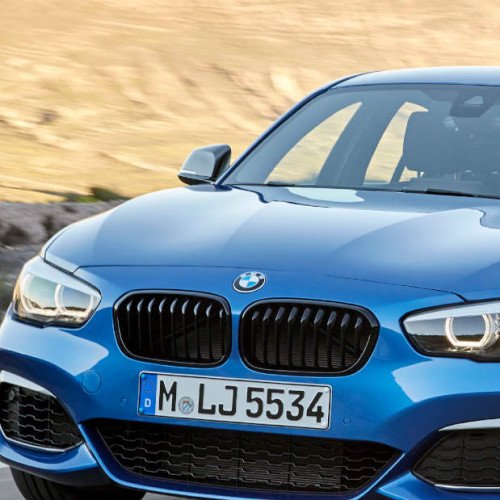
Germany is a great power with a strong economy; it has the largest economy in Europe, the world's fourth-largest economy by nominal GDP, and the fifth-largest by PPP. As a global leader in several industrial, scientific and technological sectors, it is both the world's third-largest exporter and importer of goods. As a developed country, which ranks very high on the Human Development Index, it offers social security and a universal health care system, environmental protections, and a tuition-free university education. Germany is also a member of the United Nations, NATO, the G7, the G20, and the OECD. It also has the fourth-greatest number of UNESCO World Heritage Sites.



Comments (0)
No comments yet. Be the first to share your thoughts!